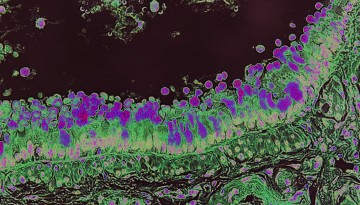
The study found that dietary inulin fiber alters the metabolism of certain gut bacteria, which in turn triggers what scientists call type 2 inflammation in the gut and lungs.
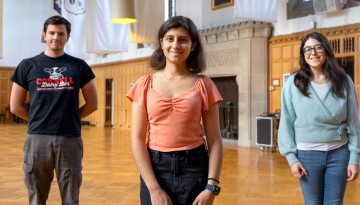
For the first time, nearly all Cornell students who live on campus will be able to vote on campus in a general election, thanks in part to the advocacy of the student group Cornell Votes.
Closing pay gaps will require employers, some of whom have little infrastructure or capacity to uphold the law, to think carefully about their compensation spectrum, experts said at an ILR forum.
With funding from CALS and Cornell Bowers CIS, Natalie Bazarova and Qian Yang have founded the Digital and AI Literacy Initiative in an effort to equip underserved communities with the resources to use digital technologies safely and responsibly.
Two populations of flycatchers that evolved on different remote islands separately developed the same trait – all-black feathers – according to a new study that used machine learning to understand the process that shaped the birds’ genome.
Narahari Umanath Prabhu, a professor emeritus who helped make Cornell’s School of Operations Research and Information Engineering truly international, died at his home in Ithaca on Oct. 14.
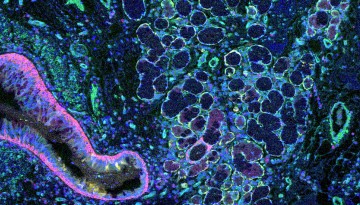
The new approach promises to accelerate studies on organ-scale cellular interactions and could enable powerful new diagnostic strategies for a wide range of diseases.
In a new book, “Seeking Truth and Hiding Facts,” Jeremy Lee Wallace, associate professor of government, explains why a few numbers long defined Chinese politics – until they no longer measured up.
At the upcoming Conference of the Parties – best known as COP27 – 11 Cornell students will help delegations from small countries gain a stronger environmental voice.
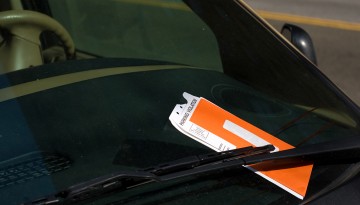
Parking-ticket recipients who would benefit most from gentle “nudges” to pay their fines – those who are least responsive to tickets in the first place – respond least to those reminders, according to research from Johnson associate professor Ori Heffetz.
Both the type of online content moderator and the “temperature” of the harassing content influenced people’s perception of the moderation decision, new research finds.