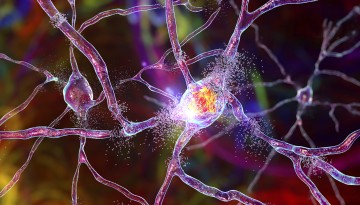
Aggregates of a protein spread in the brains of people with Parkinson’s disease through a cellular waste-ejection process, suggests a new study led by Weill Cornell Medicine researchers.
In advance of his October 3 lecture at the College of Architecture, Art, and Planning (AAP), preview examples of Rojas's performances and gain insight into the motivations that fuel his work.
Cornell researchers installed electronic “brains” on solar-powered robots that are 100 to 250 micrometers in size, so the tiny bots can walk autonomously without being externally controlled.
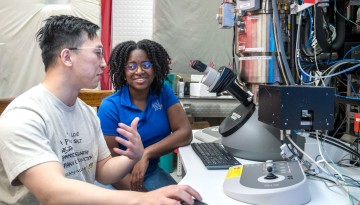
During the past year, students and faculty at Cornell and North Carolina Agricultural and Technical State University have been partnering on a research project built around two shared goals: increasing diversity in the field of materials science and transforming the way the world generates and stores energy.
A series of free, evidence-informed apps for preschool-aged children, developed by a Cornell researcher and colleagues, aims to encourage healthy eating behaviors and exercise.
The Cornell Institute for Public Affairs (CIPA) has a new name. It is now the MPA Program at the Cornell Jeb E. Brooks School of Public Policy, and the degree name will be the Cornell Brooks School MPA.
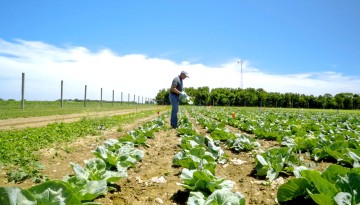
The Long Island Horticultural Research and Extension Center on Sept. 22 will celebrate a century of applied research and education supporting the region’s agricultural and horticultural businesses.
Archaeologist Sturt Manning hopes to settle one of modern archaeology’s longstanding disputes: the date of a volcanic eruption on the Greek island of Santorini, traditionally known as Thera.
Weill Cornell Medicine investigators have identified definitive biological links between African ancestry and disease processes that affect an aggressive cancer type called triple-negative breast cancer.
Cornell University will lead a four-year, $2 million project sponsored by the National Science Foundation to implement a multi-container software framework for the Weather Research and Forecasting Model.
Stanton Shannon, who supported New York farmers through his research on sweet corn, onions and squash, died Jan. 6 in Riverside, California. He was 94.