This award recognizes a veterinary researcher on the basis of lifetime achievement in basic, applied or clinical research. Winners are selected on the total impact their career has had on the veterinary or biomedical professions.
Juris Hartmanis, a Turing Award-winning pioneer who was instrumental in establishing computer science as an independent field, and founding chair of Cornell’s Department of Computer Science, died July 29 at 94.
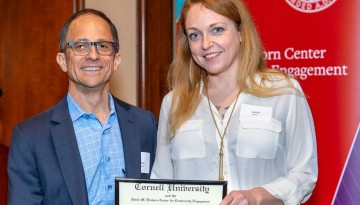
Laura Niemi, assistant professor of psychology in the College of Arts and Sciences and management and organizations in the Cornell SC Johnson College of Business, has won the 2022 Kaplan Family Distinguished Faculty Fellowship for her work teaching applied moral psychology through community-engaged learning.
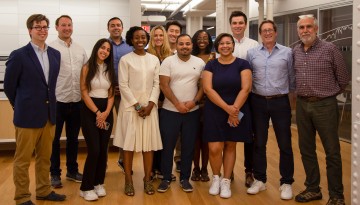
Student entrepreneurs in the Johnson Summer Startup Accelerator gathered in Manhattan for the first annual JSSA New York City Trek, a day dedicated to engaging with NYC-based investors, founders, and entrepreneurs.
Plant-based alternatives to beef will help reduce carbon dioxide emissions, but they could disrupt the agricultural workforce, threatening more than 1.5 million industry jobs.
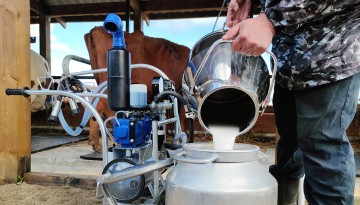
Rising temperatures pose major challenges to the dairy industry – a Holstein’s milk production can decline 30 to 70% in warm weather – but a new Cornell-led study has found a nutrition-based solution to restore milk production during heat-stress events, while also pinpointing the cause of the decline.
Now in its 19th year, the ASPCA Cornell Maddie’s ® Shelter Medicine Conference drew more than 300 veterinarians, technicians, clinic staff and students from across the country.
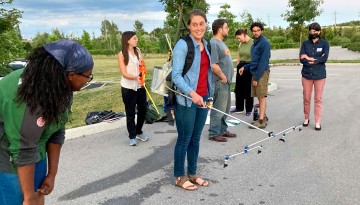
Cornell’s undergraduate Weed Team won first place, while Megan Wittmeyer ’22 earned a top individual award, at the Northeastern Weed Science Society Collegiate Weed Science Contest.
Mildred Warner, professor of city and regional planning in the College of Architecture, Art and Planning and global development in the College of Agriculture and Life Sciences, has been honored for her work to promote age-friendly communities and public health in Tompkins County, New York.