A team of researchers has assembled a reference genome for Solanum lycopersicoides, a wild relative of the cultivated tomato, and developed web-based tools to help plant researchers and breeders improve the crop.
Top private and public sector leaders, academics, experts, and practitioners will meet for a workshop at Cornell Tech focusing on new methods of infrastructure delivery. The issue is especially timely because of the $1.2 trillion infrastructure bill signed into law by President Biden.
Three Cornell scientists were honored during a June 1 ceremony promoting women’s engagement in innovation and commercialization – part of Cornell’s efforts to elevate women inventors, who were awarded just 12.8% of all U.S. patents in 2019.
Weill Cornell Medicine and New York Genome Center researchers, in collaboration with Oxford Nanopore Technologies, have developed a new method to assess on a large scale the three-dimensional structure of the human genome.
New research seeks to quantify traffic emissions associated with e-commerce facilities in New York City, and wood stove and fuel oil emissions in Tompkins County.
Bellamy, an 18-year veteran of the Cornell University Police Department and its first Black chief, will help lead the university’s transition to a new public safety structure as part of the Division of Public Safety.
Fernando Santiago ’86 was recognized for his service in Monroe County, where he leads several nonprofits that assist people in need of food, housing, training and other support.
The new Excellence in Professional Staff Academic Advising Awards recognizes the critical work of front-line academic advisors in Cornell’s colleges, academic departments, and central advising units across campus.
Social justice and engineering blend beautifully. Last semester, Cornell students built a trailblazing food-sharing pantry to take an edge off chronic hunger among local residents.
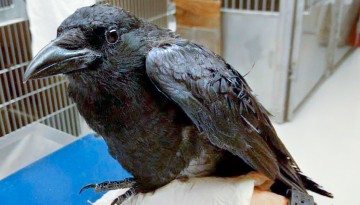
Researchers tracked the crows’ immune response while in the hospital, finding that the birds shed the virus in respiratory secretions for at least 93 days after being infected.
Farmers can tailor their efforts to control weeds more effectively by pinpointing when a particular weed will emerge, according to a new Cornell study.