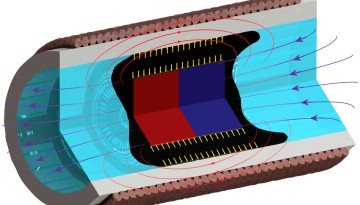
A collaboration between Cornell researchers and the U.S. Army Research Laboratory has leveraged hydrodynamic and magnetic forces to drive a rubbery, deformable pump that can provide soft robots with a circulatory system, in effect mimicking the biology of animals.
New research found that establishing complete trauma care programs accessible to 100% of road injury victims could save the lives of 200,000 people annually.
The grant from the National Science Foundation will support a team of Cornell physicists who smash matter into its component parts to learn about elementary particles and their interactions.
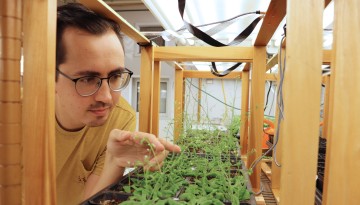
The first comprehensive annotation of long intergenic non-coding RNAs (lincRNAs) in the genomes of four mustard species provides a solid foundation for understanding how these molecules contribute to important traits in agricultural crops,.
A three-year, $15 million partnership between Cornell and NewYork-Presbyterian will employ artificial intelligence to help improve outcomes for people with cardiovascular disease.
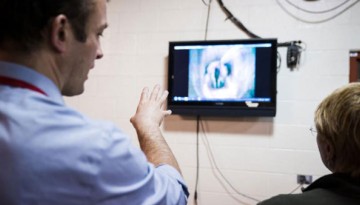
Jonathan Cheetham, Ph.D. ’08, associate professor at the College of Veterinary Medicine, is making important forays into equine airway research, with a clinical interest in upper airway surgery and equine sports medicine.
The inductees hail from all around the country and come with a variety of backgrounds experiences, ranging from working at the American Institute for Goat Research to volunteering for Cornell University’s Emergency Medical Service.
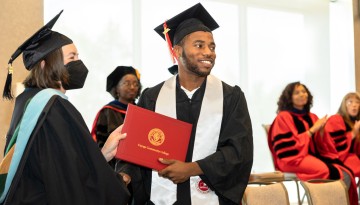
In a July 10 ceremony at the Statler Hotel, the Cornell Prison Education Program honored graduates released since the start of the pandemic, which curtailed prison-based commencements.
New Cornell psychology research is the first to examine daily experiences of racial discrimination as a key stressor in the lives of African American couples.