The Cornell Board of Trustees voted May 26 to approve the Paul Rubacha Department of Real Estate, to be managed between the College of Architecture, Art and Planning and the Cornell SC Johnson College of Business.
A persistent rapid-fire fast radio burst source – sending out a cosmic ping from more than 3.5 billion light years away – helps reveal the secrets of the broiling space between galaxies.
Computing-related retraumatization can be lessened or avoided in a few low- or no-cost ways, according to research co-led by Nicola Dell and Tom Ristenpart of Cornell Tech and the Cornell Ann S. Bowers College of Computing and Information Science.
As the cherished rainforest in South America’s Amazon River region continues to shrink, the river itself now presents evidence of other dangers: the overexploitation of freshwater fish.
More than $66 million in scholarship funds, first announced last fall, are opening up possibilities for students across the Cornell SC Johnson College of Business, thanks to the generosity of alumni.
Michael Koch, the longtime editor of Cornell’s renowned literary magazine and lecturer in the Creative Writing Program in the College of Arts and Sciences, died on May 27 after a brief illness. He was 75.
Willy, a 3-year-old quarter horse, was diagnosed by a Cornell team with equine recurrent uveitis, a complex autoimmune disease with both genetic and environmental factors.
Our 11th episode features Stephanie Wisner ’16, co-founder of Centivax, a therapeutics company that’s creating universal vaccines to reduce and eradicate the remaining complex pathogens of the 21st century.
In a Cornell China Center webinar held May 27, legal scholars based in China, Switzerland and the United States surveyed artificial intelligence regulation across the world, identifying strategic similarities and local distinctions.
Doctoral students Rafid Bendimerad and Angela Nankabirwa were selected to receive 2022 Africa Fund Fellowships, which provide support to doctoral student applicants who are citizens of an African country.
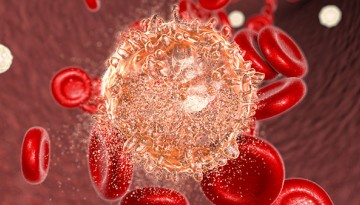
Genetically engineered immune cells successfully target the specific cancer cells that may be responsible for relapse of acute myeloid leukemia, according to a preclinical study by investigators at Weill Cornell Medicine.