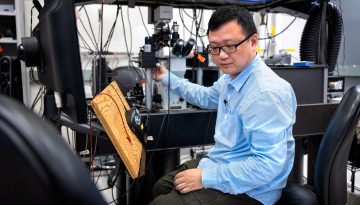
The FutureSounds Festival extended the existing sound world with presentations by guest builders and performers and newly designed instruments and compositions by Cornell students.
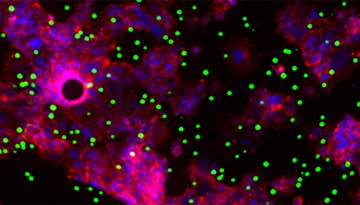
The Weill Cornell Medicine research takes a step toward precision medicine for a type of cancer that disproportionately affects people with African ancestry, an underserved population.
The team created and tested a new imaging approach which integrates information about where objects might be located with sonar processing algorithms that decide the optimal views.
The Fulbright U.S. Student Program, administered at Cornell by the Mario Einaudi Center for International Studies, allows recipients to define and carry out their own research projects in host countries.
The discovery made by two doctoral students could have future implications for human health, setting a path for research into understanding brain function.
Cornell researchers designed a micro-sized artificial cilial system that could eventually enable low-cost, portable diagnostic devices for testing blood samples, manipulating cells or assisting in microfabrication processes.
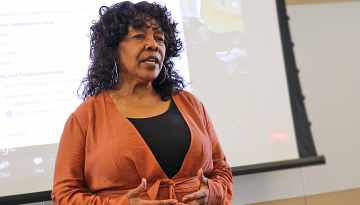
With the new Cornell Academic Materials Program, the university seeks to continue its work toward a more equitable campus that supports a positive and transformative student experience.
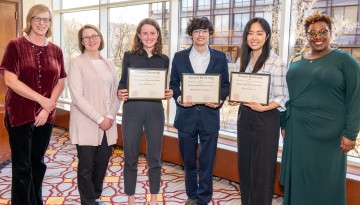
Matthew Borinshteyn ’25, Jennifer Lee ’23 and Avery MacLean ’22 received the 2022 Robinson-Appel Humanitarian Awards in recognition of their significant involvement in community service.