A select group of student entrepreneurs are chosen from W.E. Cornell's fall cohort to participate in its spring cohort where they conduct customer discovery and hone their business models.
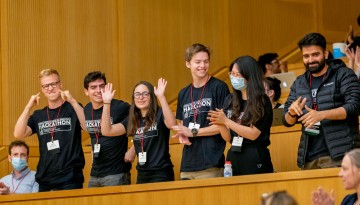
Students from 28 fields across six different schools gathered at the fourth annual Digital Agriculture Hackathon, March 11-13, to find solutions to global food system issues while competing for cash prizes.
A public panel on climate justice and data – ranging from communities using inexpensive sensors for environmental monitoring, to collaborative analysis of obscure government records – will take place at 5:30 p.m. Friday, March 18, in G01 Gates Hall.
For the first time in its 23-year history, the Cornell Ann S. Bowers College of Computing and Information Science has more than 2,000 undergraduate majors within its three departments – the latest milestone amid a sixfold growth in enrollment over the last decade.
Eleven assistant or associate professors representing four colleges have recently received National Science Foundation Faculty Early Career Development Awards to support their research objectives.
A team from Cornell Bowers CIS has developed AutoPhoto, a robotic system that can roam an interior space and capture aesthetically pleasing photographs through a machine learning process.
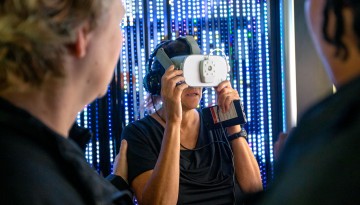
Powering augmented and virtual reality technologies to tackle real-world problems is the focus of a two-year, $1.8 million grant from Meta and Spark AR to Cornell Bowers CIS and Cornell Tech’s XR Collaboratory.
A Cornell Tech clinic has created a new approach to helping survivors of domestic abuse stop assailants from hacking into their devices and social media to surveil and harass them.
Biologist Alex Flecker and computer scientist Carla Gomes co-led a project that employed AI and around 40 researchers in an attempt to determine optimal placement of around 350 hydropower dams in the Amazon river basin.