Cornell is a global leader in sustainability and climate change research, teaching and engagement. Our campuses are living laboratories for developing, testing and implementing solutions that address these most challenging issues.

Cornell Atkinson: a decade of collaborative sustainability

The Cornell Atkinson Center for Sustainability is celebrating its 10th anniversary by focusing with renewed urgency on more powerful ways to translate knowledge into action.

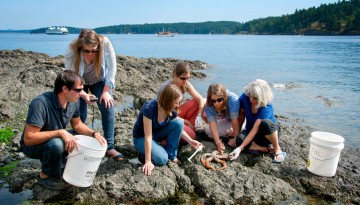
Psychological ownership improves care of public parks, lakes

Marketing strategies that boost feelings of psychological ownership can increase people's willingness to clean up trash, donate money and volunteer at public parks, according to research co-authored by Suzanne Shu, professor of marketing.

Authors break down history of ‘envirotech’ in new book

A new research field – “environmental technology, or envirotech” – is emerging during an age when food systems span the globe, waste pollutes the natural world and natural disasters seem to have higher impacts on communities.

Cornell startup Combplex wins $500K in 76West competition

A Cornellian-led startup dedicated to protecting honeybees has been selected as a $500,000 winner in the fifth annual 76West Clean Energy Competition.

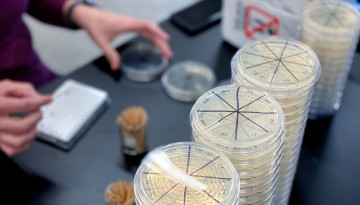
Using microbes, scientists aim to extract rare-earth elements

A U.S. Department of Energy agency has awarded $1 million to Cornell researchers, who are using programmed microbes to mine rare-earth minerals used in consumer electronics and advanced renewable energy.

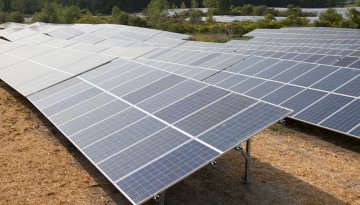
Zhang helps NYS to go solar, avoid land-use conflicts

Engineering professor Max Zhang has been awarded a NYSERDA grant to determine efficient solar farm array configurations so the state can avoid land-use conflicts or spoiling precious agricultural space.

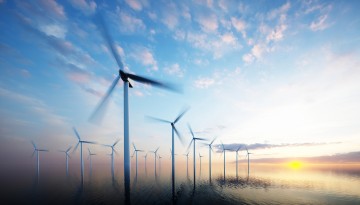
Grant supports development of efficient offshore wind farms

A new interdisciplinary research project is designed to unlock the power of wind energy by optimizing the spacing between wind turbines and wind turbine arrays to maximize power production.

NSF grant to fund research into ‘microcleaners’ for waterways

A $2 million grant from the National Science Foundation will fund research, led by Nicholas Abbott from the Smith School of Chemical and Biomolecular Engineering, into “microcleaners” for waterways.

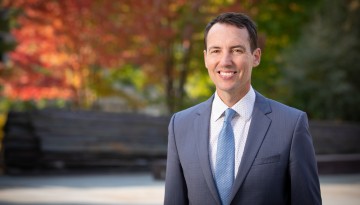
New CALS dean sees climate resilience in agriculture

Environmental scientist Benjamin Z. Houlton, the new dean of the College of Agriculture and Life Sciences, says agriculture is the most important industry of the 21st century – and a powerful weapon to combat climate change.