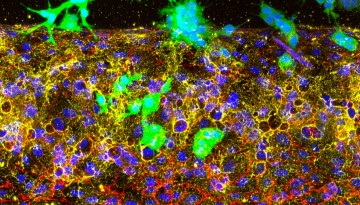
A new study revealed how a deadly form of pancreatic cancer enters the bloodstream, solving a long-standing mystery of how the disease spreads and identifying a promising target for therapy.
Cornell professors are sharing what they’ve learned about best practices in physics labs with physics faculty and instructors nationwide through The Introductory Physics Lab Institute.
Scott Emr, the Samuel C. and Nancy M. Fleming Professor Emeritus in the College of Arts and Sciences, has won the World Laureate Association Prize, one of the world’s highest-funded scientific awards.
Nozomi Ando, professor of chemistry and chemical biology in the College of Arts and Sciences, has been named a Schmidt Polymath, part of a global cohort of eight scientists and engineers who will each receive up to $2.5 million over five years.
Cornell researchers have demonstrated that, by zapping a thin film with ultrafast pulses of low-frequency infrared light, they can cause its lattice to atomically expand and contract billions of times per second, potentially switching its electronic, magnetic or optical properties on and off.
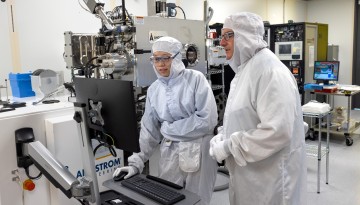
The Cornell NanoScale Science and Technology Facility has enabled scientists and engineers from academia and industry to conduct groundbreaking research, thanks to continuous support from the National Science Foundation. But that funding is now at risk.
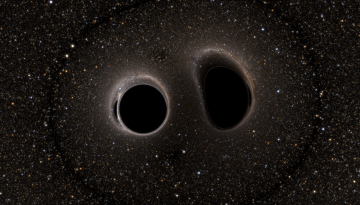
The LIGO-VIRGO-KAGRA team has announced a black hole merger similar to its first detection; a decade’s worth of technological advances allow unprecedented tests of General Relativity to be performed.