Cornell will hold two in-person commencement ceremonies for the Class of 2023 and their guests on Saturday, May 27, at Schoellkopf Field. The ceremonies are scheduled for 10 a.m. and 2:30 p.m.
A gift to establish a new dispute resolution faculty professorship was made through the estate of an inseparable couple who shared their hearts with generations of ILRies.
A new garden at Akwe:kon, established by students from the American Indian and Indigenous Studies Program and the Cornell Botanic Gardens, aims to honor Indigenous students and their connection to the land.
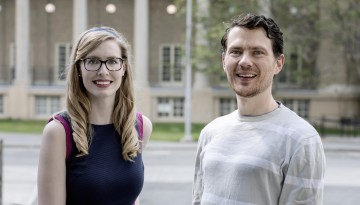
Doctoral candidates Julia Nolte and Ewan Robinson are the 2022-23 recipients of the Cornelia Ye Outstanding Teaching Assistant Award. The award recognizes two outstanding graduate teaching assistants (TAs), one domestic and one international, who have clearly demonstrated dedication and excellence in their teaching responsibilities.
The public is invited to the Game Design Initiative at Cornell showcase, held Saturday, May 20 from 1-4 p.m. in Clark Atrium in the Physical Sciences Building, to play video games created by students in Game Development courses.
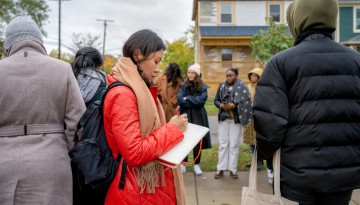
Cornell students explored creative ways to understand urban landscapes during two cross-disciplinary courses this year, part of Cornell's Mellon Collaborative Studies in Architecture, Urbanism and the Humanities.
This summer, 101 students in the College of Arts and Sciences will take part in groundbreaking research on campus with 61 faculty as part of the Nexus Scholars Program.
A $2.5 million grant will fund 13 research projects across the sciences, social sciences and humanities for novel investigations ranging from quantum computing to foreign policy development and from heritage forensics to effects of climate change.
From monitoring blood pressure to potholes: Professor Max Zhang's Internet of Things (IoT) course teaches students how to leverage IoT sensor technology to solve real-world problems and help the community.
Abigail Boatmun ’23, of Oklahoma, was recognized for her participation and leadership in a myriad of town-gown interests focused on mentorship, literacy and educational equity.
Many people tend to think of cities as places devoid of nature, but a new study suggests that cities offer unique opportunities for wildlife conservation, not to mention the value that nature can have for human health and well-being.