The continued sales growth of electric passenger vehicles will be having a greener, cleaner influence on air pollution in most metro U.S. regions, all the while reducing human death by mid-century.
A Medicare system that is meant to assess and incentivize health care quality with pay adjustments may not be working as intended, according to a study from researchers at Weill Cornell Medicine.
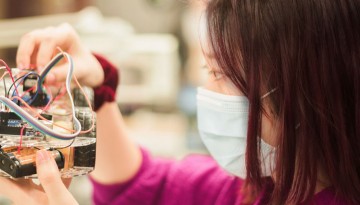
Researchers combined optical sensors with a composite material to create a soft robot that can detect when and where it was damaged – and then heal itself on the spot.
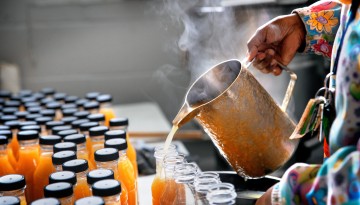
For more than 30 years, the Cornell Food Venture Center (CFVC) has helped entrepreneurs transform family recipes and homemade eats into successful commercial food products. Now, a new online program from Cornell is expanding access to the CFCV’s expertise and supporting the growth of food entrepreneurs around the globe.
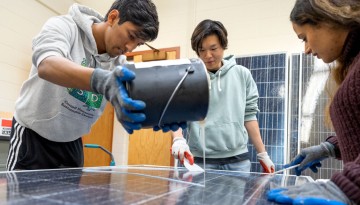
Using polyurethane, resin, epoxy – and gallons of wit – the Solar Panel Reboot student team, part of the Cornell University Sustainability Design, provides an afterlife to old, broken photovoltaic boards.
People who are feeling tense due to demands at work or home tend not to reward themselves with gifts, new research finds – even though a new product or visit to the spa might be exactly what they need.
Drew Harvell, professor emerita of ecology and evolutionary biology who studies sustainable marine biodiversity, is one of seven U.S. researchers named 2023 U.S. Science Envoys by the Department of State.
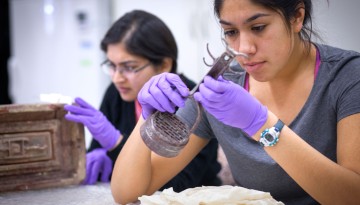
Cornell University Library has acquired a trove of archival materials documenting the creation of “The Civilization of Llhuros,” a groundbreaking 1972 art exhibit that satirized the tropes of archaeology and anthropology to draw crucial connections between the past and the present, highlighting the challenges all societies face.
The robot’s layered filtration system will gather tiny bits of plastic the size of a sesame seed and smaller, which contaminate ecosystems and damage human and animal health.
President Martha E. Pollack has established a task force to interrogate all aspects of the undergraduate admissions process and to recommend a universitywide admissions policy and best practices that will be guided by Cornell’s founding mission and can be adapted by the admissions offices of each school and college.
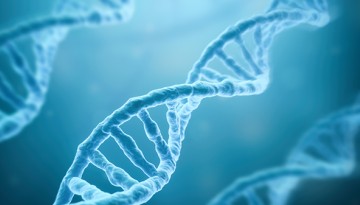
At the heart of every CRISPR reaction, whether naturally occurring in bacteria or harnessed by CRIPSR-Cas gene editing technology, is a strong molecular bond of a Cas protein via a guide RNA to its target site on DNA.
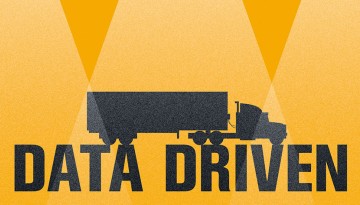
Karen Levy, associate professor of information science, examines how truckers’ work is being affected by a proliferation of electronic logging technology in a new book, “Data Driven: Truckers, Technology, and the New Workplace Surveillance.”