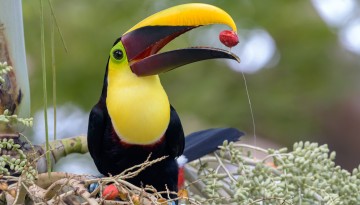
Birds living in tropical mountains have narrow ranges. Why not make use of the whole mountain? A new study finds the dominant influence for their choice has to do with the neighbors.
A portable diagnostic device designed by researchers at Cornell Engineering and Weill Cornell Medicine seeks to provide a fast and accurate diagnosis of Kaposi sarcoma, a common yet difficult-to-detect cancer that often signals the presence of HIV infection.
Nix, a miniature donkey with a potentially fatal heart condition, is on the mend after a successful pacemaker implantation by veterinarians at the Cornell University Hospital for Animals – the first surgery of its kind in a large animal species at Cornell.
Thirteen enlisted military service members and veterans completed an intensive two-week curriculum at Cornell in partnership with the nonprofit Warrior-Scholar Project, which helps veterans transition to higher education.
In a series of research projects and as a designer, Martin Hogue, associate professor of landscape architecture, has explored the history and culture of camping.
The financial stability of providers and their ability to serve patients is being threatened by Wall Street, according to new research co-authored by ILR Professor Rose Batt.
A team led by Greeshma Gadikota from the College of Engineering was named a finalist for a national prize to domestically extract lithium – an essential ingredient for a greening world.
For the first time since 2019, 85 Central New York high schoolers spent six weeks at Cornell this summer through Upward Bound, a free college preparatory program.
Four undergraduates are working with a professor this summer to research how forests cycle and store carbon and nutrients in trees, microbes, and soil, and how these processes respond to changes in climate, air pollution and disturbances.