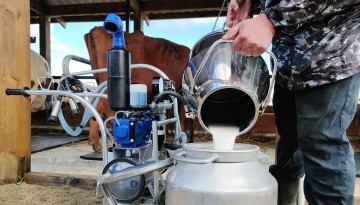
Rising temperatures pose major challenges to the dairy industry – a Holstein’s milk production can decline 30 to 70% in warm weather – but a new Cornell-led study has found a nutrition-based solution to restore milk production during heat-stress events, while also pinpointing the cause of the decline.
Now in its 19th year, the ASPCA Cornell Maddie’s ® Shelter Medicine Conference drew more than 300 veterinarians, technicians, clinic staff and students from across the country.
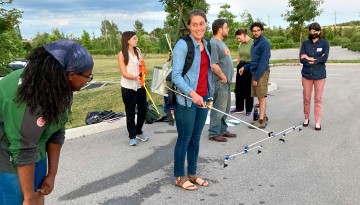
Cornell’s undergraduate Weed Team won first place, while Megan Wittmeyer ’22 earned a top individual award, at the Northeastern Weed Science Society Collegiate Weed Science Contest.
Mildred Warner, professor of city and regional planning in the College of Architecture, Art and Planning and global development in the College of Agriculture and Life Sciences, has been honored for her work to promote age-friendly communities and public health in Tompkins County, New York.
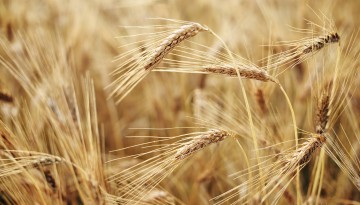
Adjusting the sowing dates for wheat in eastern India will increase untapped potential production by 69%, new research shows, helping to ensure food security and farm profitability as the planet warms.
Citing the urgent need for more effective and equitable health communication, Cornell and two other universities are collaborating on a unique research endeavor that will quickly identify developing public health issues, address conflicting messages and counter misinformation.
Xiangkun (Elvis) Cao, Ph.D. ’21, and Berit H. Goodge, Ph.D. ’22, were selected as 2022 Schmidt Science Fellows. As fellows, they will take on postdoctoral placements focused on collaborative, interdisciplinary research.
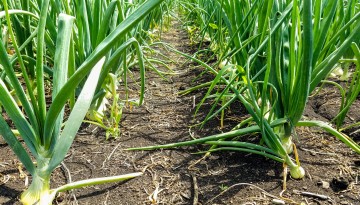
A surprise finding from new research on controlling pests and disease in New York commercial onion fields will enable the state’s producers to cut their use of synthetic chemicals without sacrificing yield.
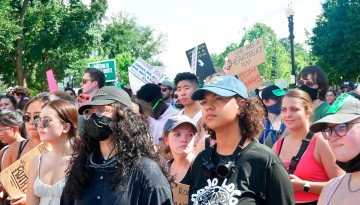
From witnessing a massive peaceful protest to contributing to the success of an international effort to feed the hungry, students completing internships in Washington, D.C. through the Cornell in Washington program are experiencing a summer to remember.
A curator of global new media art for 25 years, Timothy Murray uses his book to introduce artists working in digital and electronic media and traces their struggle against the government surveillance and corporate culture that control digital tools.
A growing percentage of U.S. adults, even those who trust science, said harassing or threatening public health officials over COVID-19 business closures was justified, according to a new study of public opinion surveys conducted during two phases of the pandemic.