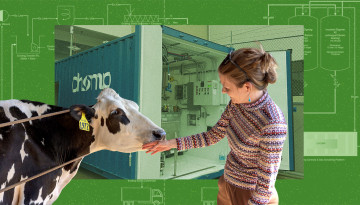
One of the newest additions to Cornell’s Living Lab, the anaerobic digester will generate electricity and provide a real-world testbed for researchers across campus.
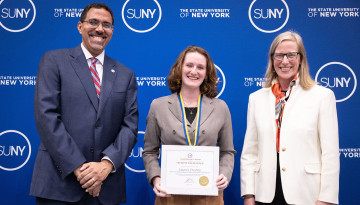
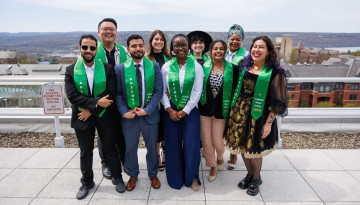
Nine students and recent graduates representing Cornell’s four contract colleges have been chosen to receive the 2026 State University of New York (SUNY) Chancellor’s Award for Student Excellence.
Microbes that cause an infection remain biochemically active after they die, continuing to trigger a host’s immune system while also making the immune response less effective.
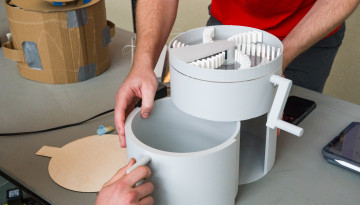
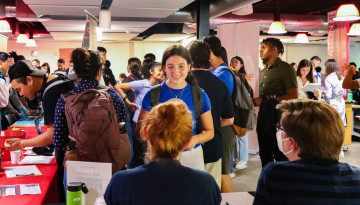
Nearly 200 Cornell Duffield Engineering students exhibited handheld scrapers for insect egg masses, automated vineyard net-lifting systems, and even early-stage mechanical sorters designed to separate invasive spotted lanternflies from harvested grapes.
Thirty student startups received Human Spirit, Beck Fellows and Cane Entrepreneurial Scholars awards this summer from Entrepreneurship at Cornell, funding that will allow students to work on their startups rather than take traditional summer positions.
Ten doctoral candidates were inducted into the Cornell Chapter of the Bouchet Graduate Honor Society, which recognizes outstanding scholarly achievement and service in doctoral education.