Cornell is a global leader in sustainability and climate change research, teaching and engagement. Our campuses are living laboratories for developing, testing and implementing solutions that address these most challenging issues.


More than 99.9% of studies agree: Humans caused climate change

More than 99.9% of peer-reviewed scientific papers agree that climate change is mainly caused by humans, according to a new survey of 88,125 climate-related studies.

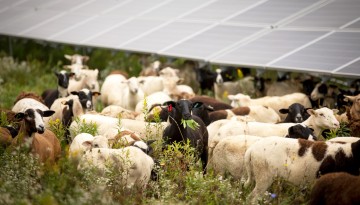
Electric sheep: Grazing in arrays supports economy, climate

A new USDA-funded project seeks to increase coordination and logistical services for farmers grazing sheep under solar arrays.

Student-designed ‘TCAT to Trails’ map plots path to nature

Enjoy area trails, parks, natural beauty and autumnal wonder, with no need for a car: Just lace up your hiking boots and leave the driving to the TCAT bus system.

Designer Shares Her Love of Sustainable Luxury

Mimi Prober will serve as designer-in-residence at the Jill Stuart Gallery from Oct. 13 to Nov. 9. She will meet with students, critique their work and exhibit her own. She will also create a new garment made from pieces that were slated to be retired from the Cornell Fashion + Textile Collection.

Around Cornell

Agribusiness vies with democracy in California, book says

A new book, “In the Struggle: Scholars and the Fight Against Industrial Agribusiness in California,” by Scott J. Peters and Daniel J. O’Connell, weaves together the stories of eight scholar-activists who opposed agribusiness consolidation in California.

Natural climate protection may be written in stone

The rocky surface of Earth’s geology may provide a buffer for climate change to absorb excess carbon, according to a new Cornell paper in Global Biogeochemical Cycles.

Canadian research team earns Borlaug Gene Stewardship Award

The rust-resistant wheat cultivar development team at Agriculture and Agri-Food Canada (AAFC) earned the Borlaug Global Rust Initiative (BGRI) 2021 Gene Stewardship Award for their long-standing innovations and strategies to…

Around Cornell

Cheers! Wine’s red grape pulp offers nutritional bounty

Cornell food scientists now show that the leftover pulp from the red wine making process has the potential to be a nutritive, illness-reducing treasure.

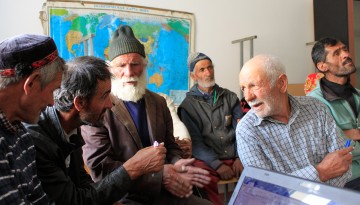
Climate change adaptation requires Indigenous knowledge

Karim-Aly Kassam is leading a project that brings together Indigenous and rural communities and scholars from across the globe to develop ecological calendars that integrate local cultural systems with seasonal indicators.