A mitochondrial gene plays a crucial role in genetic susceptibility to Zika, Dengue and SARS-CoV-2 infections, according to a new study by Weill Cornell Medicine investigators.
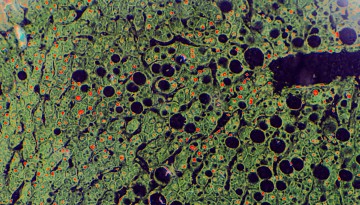
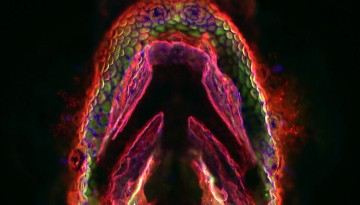
Lipids – fats – make great walls for cells and organelles because they are water resistant and dynamic. But those same characteristics also make them hard to image using expansion microscopy, a technique that works for magnifying other cell components.
The confusing response to COVID-19 in the U.S. resulted from decisions by President Donald Trump and his allies to politicize the pandemic by associating it with his own fate in office, according to a new book by a Cornell author.
More than 70 faculty from Weill Cornell Medicine, Cornell Engineering and Cornell Tech assembled Oct. 1 at the Statler Ballroom — and more joined remotely — to kick off the Cornell Engineering Innovations in Medicine initiative.
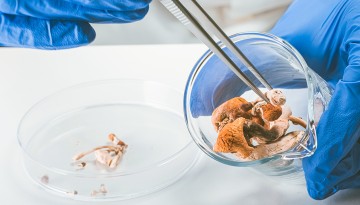
The psychedelic drugs LSD and psilocybin activate serotonin receptors on brain cells in a way that reduces the energy needed for the brain to switch between different activity states, according to a study led by Weill Cornell Medicine researchers.
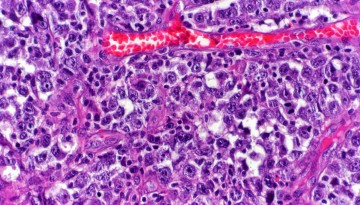
The presence of some fungal species in tumors predicts – and may even help drive – worse cancer outcomes, according to a study from Weill Cornell Medicine and Duke University researchers.
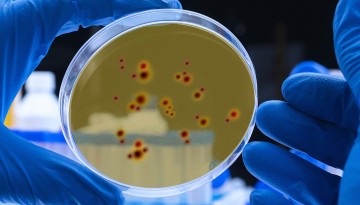
A new Cornell research project aims to gain a better understanding of how populations of microbes interact on surface environments, such as human skin, where their dynamics are not fully understood.
As doctoral students nearly 20 years ago, two Cornell researchers played an early role in the development of the work that was awarded the 2022 Nobel Prize in chemistry.