Mario Herrero, a professor in the Department of Global Development and a Cornell Atkinson Scholar, has been appointed to the EAT-Lancet 2.0 leadership team to spearhead the modeling workstream.
The 14th episode of a podcast hosted by Entrepreneurship at Cornell, Startup Cornell, features David Stein MBA ‘20, co-founder and CEO of Ash Wellness.
The blood stem cell mutation, known as DNMT3A R882, leads to the growth of a large population of circulating blood cells that also contain this mutation.
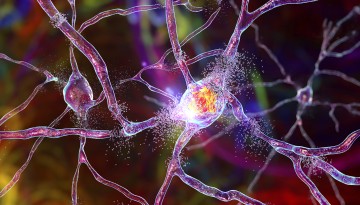
Aggregates of a protein spread in the brains of people with Parkinson’s disease through a cellular waste-ejection process, suggests a new study led by Weill Cornell Medicine researchers.
A series of free, evidence-informed apps for preschool-aged children, developed by a Cornell researcher and colleagues, aims to encourage healthy eating behaviors and exercise.
Weill Cornell Medicine investigators have identified definitive biological links between African ancestry and disease processes that affect an aggressive cancer type called triple-negative breast cancer.