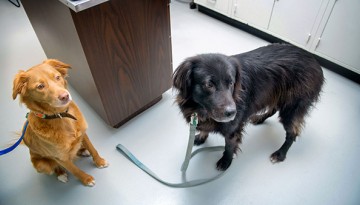
Researchers from Weill Cornell Medicine and the College of Veterinary Medicine are expanding the potential of precision medicine for canine and human patients, by studying a lymphoma that occurs in both people and dogs.
The virtual panel, “One Health: Cornell’s Collaborative Approach to Ensuring Human, Animal and Ecosystem Health in the Time of COVID-19,” was held June 6 as part of Cornell’s Reunion weekend.
Sen. Kirsten Gillibrand told New York farmers that the pandemic has exposed societal faults, including food insecurity and food supply chain weakness, at an online town hall meeting hosted by Cornell.
The tasting rooms of New York state’s craft beverage industry are beginning to open up, as Cornell held a webinar on how to do that safely in the era of COVID-19.
According to Weill Cornell researchers, epidemiological models of COVID-19 should take into account the special dynamics of the coronavirus’s spread in nursing homes and other long-term care facilities.
Sixteen faculty and professional staff members in state contract colleges at Cornell are receiving the 2019-20 State University of New York Chancellor’s Awards for Excellence.
Bacteria are growing increasingly antibiotic-resistant, but new research reveals how certain enzymes could be exploited to develop new classes of drugs to fight bacterial infections.