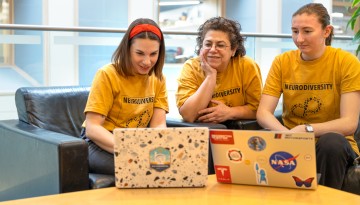
A diverse group of students and recent graduates representing Cornell’s four contract colleges has been selected to receive the 2023 State University of New York Chancellor’s Award for Student Excellence.
Ten Graduate School doctoral candidates, joined by one student from the Weill Cornell Graduate School of Medicine, traveled from Ithaca and New York City to Capitol Hill for Cornell Ph.D. Student Advocacy Day on March 29.
Eight doctoral candidates and two postdocs were inducted into the Cornell Chapter of the Bouchet Graduate Honor Society, which recognizes scholarly achievement and promotes diversity in doctoral education.
The Cornell Institute for Digital Agriculture Hackathon, an all-weekend event, drew 150 undergraduate and graduate students from most of Cornell’s schools and colleges to the College of Veterinary Medicine.
Students from Cornell and other universities are invited to enroll now for Cornell’s Summer Session, which will feature on-campus, online and off-campus courses. Students can earn up to 15 credits taking regular Cornell courses.
Nittany, a Great Dane puppy, had ventricular arrhythmia, an often deadly heart condition. She found a cure at Cornell, one of the few places in the country with the expertise to treat it.
Cornell is home to the newly-expanded Cornell Reproductive Sciences Center (CoRe), one of the eight multidisciplinary research centers in the nation focused on reproductive biology.