From new approaches for tendon injury treatment to biomass-based construction materials, Cornell Engineering’s inaugural Sprout Awards are funding unique research projects with the potential to grow partnerships across Cornell.
Four next-generation scholars have been chosen as Cornell Atkinson Postdoctoral Fellows, forwarding projects focused on food security, energy transitions, One Health and climate change.
A new center at Cornell will fight the rise of antibiotic resistance, a global health challenge that threatens to reverse critical advances in modern medicine.
White-tailed deer – the most abundant large mammal in North America – are harboring SARS-CoV-2 variants that once widely circulated but are no longer found in humans.
Twelve Cornell and Weill Cornell Medicine faculty members – six of whom are also Cornell alumni – have been elected fellows of the American Association for the Advancement of Science, the world’s largest general scientific society.
The funding will support preliminary disease-related research, in the latest in a series of efforts to create new opportunities for interdisciplinary research.
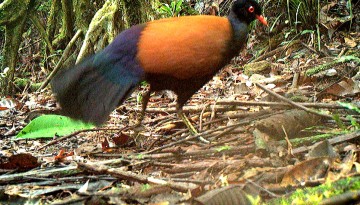
The first recorded proof of a bird not seen for 140 years, a gut bacteria that could regulate cholesterol and a senior who risked his own life to rescue a man from an oncoming subway train were among the most-read Cornell Chronicle stories of 2022.
Twenty Cornell faculty members were awarded Affinito-Stewart research grants for the 2022-2023 academic year. The grants, which are awarded by the President’s Council of Cornell Women (PCCW), provide junior faculty members from across the university with up to $10,000 in research funding.