President Martha E. Pollack has established a task force to interrogate all aspects of the undergraduate admissions process and to recommend a universitywide admissions policy and best practices that will be guided by Cornell’s founding mission and can be adapted by the admissions offices of each school and college.
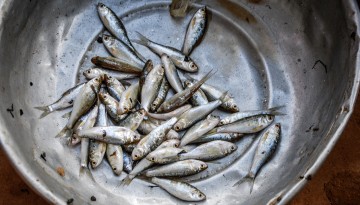
Inexpensive, small fish species caught in seas and lakes in developing countries could help close nutritional gaps for undernourished people, and especially young children, according to new research.
Sustainable Animal Husbandry, a three-credit course taught by Melanie Soberon at Cornell’s College of Veterinary Medicine, will be offered online during Winter Session 2023. The course is a way for high schoolers interested in veterinary or animal science to understand what it would be like to pursue those studies at college or what a career in those fields would be like.
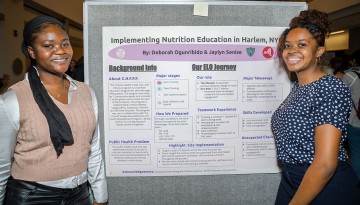
More than 100 students presented their work on a wide array of projects aimed at improving access to public health everywhere from Tompkins County to Tanzania, as part of the 2022 Global and Public Health Experiential Learning Symposium, held Nov. 11 in Cornell’s Physical Sciences Building.
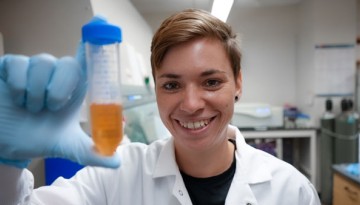
This Q&A features Christina Kerkenpass, a veterinary student at the Free University of Berlin, who participated in the Cornell Veterinary Research Program and conducted research on feline infectious peritonitis this summer.
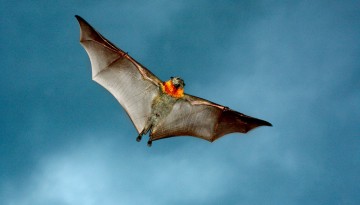
Preserving and restoring natural habitats could prevent pathogens that originate in wildlife from spilling over into domesticated animals and humans, according to two new companion studies.
Faculty from seven Cornell colleges have been named Engaged Faculty Fellows through the David M. Einhorn Center for Community Engagement, joining a network that is committed to advancing engaged teaching and scholarship at Cornell and in their academic disciplines.
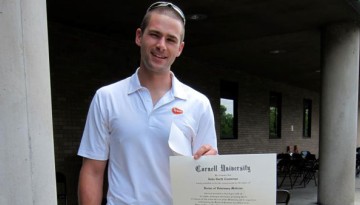
The Garth Cummings, D.V.M. ’11, and Sons Externship honors the memory and values of the alumnus, who lived a life of adventure and dedication to sound animal agriculture.