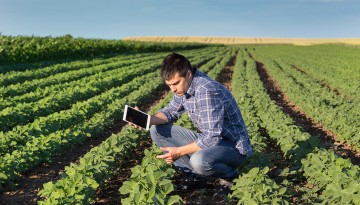
Projects ranging from a soil-swimming robot that can sense conditions in the root zone in real time to computational models that can predict produce spoilage received seed funds from the Cornell Initiative for Digital Agriculture’s new Research Innovation Fund.
Four new faculty projects have been selected to receive funding for collaborative, cross-disciplinary opportunities for learning and research in New York City.
Approximately 30 faculty members gathered May 15 in the Biotechnology Building to share lessons learned after teaching in the Canvas management system for the Spring 2019 semester.
The Atkinson Center is awarding more than $1.3 million in seed grants to support roughly a dozen interdisciplinary research collaborations at Cornell that address key sustainability challenges.
Five doctoral students in engineering will spend a fully funded semester examining the business prospects for a diverse array of Cornell technologies as the newest class of commercialization fellows.
New research from Ariel Ortiz-Bobea, Toby Ault and Carlos Carrillo in Environmental Research Letters looks at how heat stress remains the primary climatic driver of lower future agriculture yields under climate change.
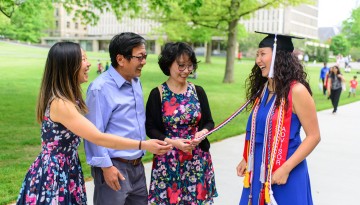
As students began to line up for Cornell’s 2019 Commencement May 26, the morning skies that threatened rain gave way to rays of sunshine wriggling between the clouds. Smiles, pomp and circumstance followed.
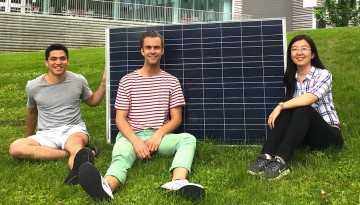
While solar farms help summer electricity demand, Cornell engineers caution that upstate winters could prompt “ramping” – bursts of sudden increases or decreases in electricity demand.
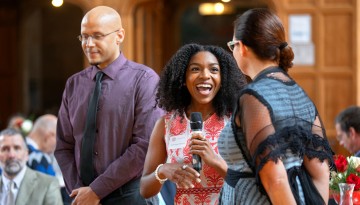
The arc of educational continuity and inspirational teaching was celebrated May 22 at the 31st annual Merrill Presidential Scholars convocation in Willard Straight Hall.