Cornell President Martha E. Pollack announced that all classes on the Ithaca campus will be suspended for three weeks effective March 13 at 5 p.m. Virtual instruction will begin April 6. Students are strongly encouraged to return to their permanent home residences as soon as feasible.
As plants try to strengthen their defenses against nematodes, those parasites try to outsmart them. New research shows that nematode species that move from plant to plant cause more than mechanical damage.
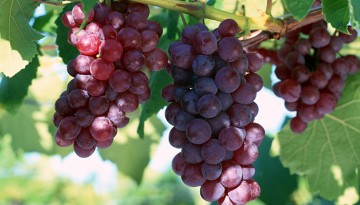
Researchers from Cornell and Pennsylvania State University are developing a high-tech, portable imaging system that will increase profits and yields by making winter grapevine pruning more efficient.
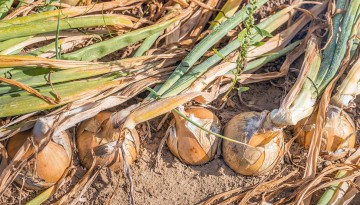
Cornell AgriTech researchers are tackling a form of onion leaf blight that recently has affected 75% of New York state onion crops, a $44.7 million industry.
Cornell researchers have determined that a hemp plant’s propensity to “go hot” – become too high in THC – is determined by genetics, not as a stress response to growing conditions.
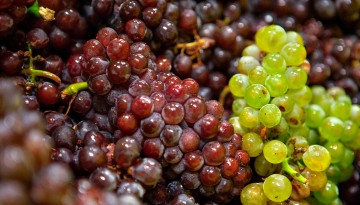
Transferring genetic markers in plant breeding is a challenge, but a team of grapevine breeders and scientists at Cornell AgriTech in Geneva, New York, has come up with a powerful new method.
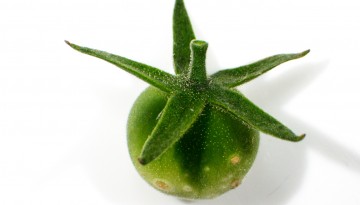
New research from the lab of Christine Smart in the College of Agriculture and Life Sciences shows that wild tomato varieties are less affected by deadly bacterial canker than traditionally cultivated varieties.