Cornell President Martha E. Pollack announced May 28 that she will be sending regular messages to the community during the summer to share opportunities for input and describe the university’s progress on reopening plans.
Alejandro Calixto, formerly head of the Florida Research Center for Corteva Agriscience, will begin May 16 as the new director of New York State Integrated Pest Management.
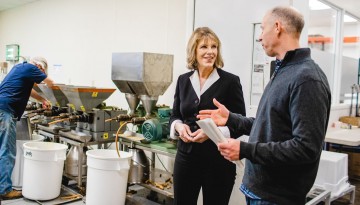
Since its doors opened in September 2018, Cornell AgriTech's Center of Excellence for Food and Agriculture has supported more than 50 New York-based companies and helped raised $12.3 million to grow businesses.
Planning committees are assessing options for reopening Cornell's campuses amid hopeful signs that the spread of COVID-19 is slowing, university leaders said April 29 during a virtual staff forum hosted by the Employee Assembly.
Cornell AgriTech’s Center for Excellence for Food and Agriculture has been helping food and ag businesses adapt to the COVID-19 economy with new marketing strategies and by diversifying products.
In a message to the Cornell community, President Martha E. Pollack detailed four principles university leaders will use to guide decisions made in the wake of the COVID-19 pandemic.
President Martha E. Pollack shared her thoughts March 17 on the many challenges Cornellians are facing around the world due to the coronavirus pandemic.