The psychology researcher is “one of the most prominent international contemporary scholars in the field of the cognitive and cultural foundations of language.”
Twenty sophomores in the College of Arts & Sciences will design their own interdisciplinary courses of study as the newest members of the Robert S. Harrison College Scholar Program.
Financial disruption as a result of pandemic containment policies in the United States adversely influenced children’s mental health, according to a new study co-led by Weill Cornell Medicine and Columbia University investigators.
Students from Cornell and other universities are invited to enroll now for Cornell’s Summer Session, which will feature on-campus, online and off-campus courses. Students can earn up to 15 credits taking regular Cornell courses.
As they seek new foods because climate change has altered their traditional diet of salmon carcasses, bald eagles in northwestern Washington state have become a boon to dairy farmers, deterring pests and removing animal carcasses from their farms, a new study finds.
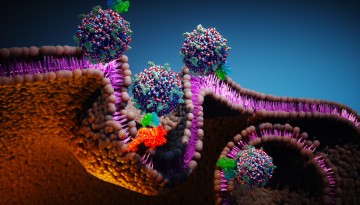
A novel cancer therapeutic, combining antibody fragments with molecularly engineered nanoparticles, permanently eradicated gastric cancer in treated mice, a multi-institutional team of researchers found.
Cornell alums Scott Ferguson ’82 and Michael Kantor ’83 – Emmy-winning producers – will reflect on their careers in film and television production during a two-day visit to campus March 28-29 as part of the College of Arts and Sciences “Arts Unplugged” series.
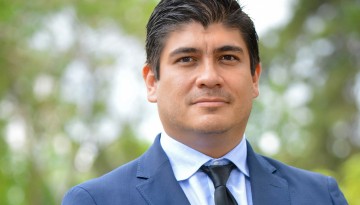
Carlos Alvarado Quesada, former president of Costa Rica, will give the Bartels World Affairs Lecture on Wednesday, March 22, at 6 p.m. in the Alice Statler Auditorium.
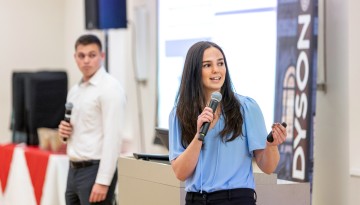
Students working to support local Indigenous heritage, dairy farmers, formerly incarcerated people and entrepreneurs in Uganda and Ithaca competed for a total of $7,500 in prize money that will fund their community collaborators.
Cornell scientists working with the U.S. Department of Energy have developed a new method for recycling high-density polyethylene using a novel catalytic approach.
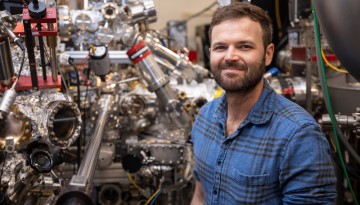
A world expert at using mechanical strain to precisely manipulate the properties of materials, Malinowski is particularly interested in superconductors.