From realtime visualization in video games to realtime urban monitoring, advances in computer, communication, and media technologies offer exciting new possibilities while raising urgent questions for architecture, planning, and digital studies. The second Preston Thomas Memorial Symposium at Cornell AAP this spring invites artists, designers, and scholars to explore them.
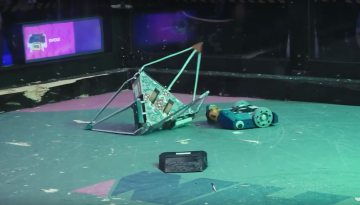
After battling three robots in the Norwalk Havoc Robot League’s March of the Bots competition, Cornell Combat Robotics looks to make upgrades with a $10,000 grant.
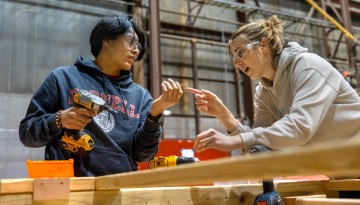
The 1983 student chapter of the American Society of Civil Engineers designed and built Flat Rock Bridge. Now the current student chapter is renovating it with the help of faculty, staff, and community members.
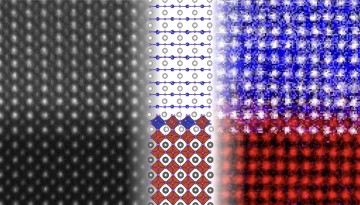
A new study has changed where scientists think Nickelate's superconducting ability might originate, providing a blueprint for how more functional versions might be engineered in the future.
Unlike most female mammals whose vaginal entrance opens before or during puberty and remains that way for the rest of their lives, this rodent’s vaginal entrance remains sealed into adulthood and has the ability to open or close back up multiple times during a lifetime.
Edward Dean Wolf, a pioneer in nanofabrication who joined Cornell in 1978 as the first director of what would become the Cornell Nanoscale Science and Technology Facility, died March 11 in Ithaca. He was 87.
Carlos Alvarado Quesada, former president of Costa Rica, spoke at the Bartels World Affairs Lecture on how he dealt with challenges related to democracy and the environment during his presidency from 2018 to 2022.
Multiple types of beta cells produce insulin in the pancreas, helping to balance blood sugar levels. Losing a particularly productive type of beta cell may contribute to the development of diabetes, according to a new study by Weill Cornell Medicine investigators.
In flood-prone New York, non-white homeowners are more likely to take active measures – like protecting a furnace or installing a sump pump – to prepare for deluge, says Cornell research.
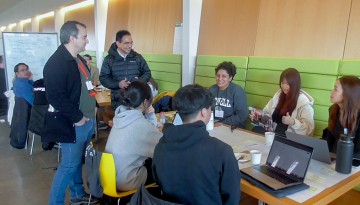
The Cornell Institute for Digital Agriculture Hackathon, an all-weekend event, drew 150 undergraduate and graduate students from most of Cornell’s schools and colleges to the College of Veterinary Medicine.