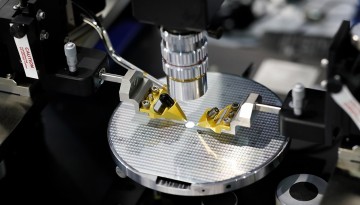
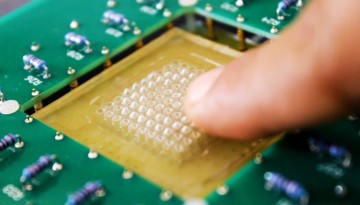
Cornell researchers have built a programmable optical chip that can change the color of light by merging photons, without requiring a new chip for new colors – technology that could potentially be used for classical and quantum communications networks.
A Cornell doctoral student has developed an open-source software package that could transform how engineers design floating offshore structures for renewable energy and other ocean applications.
The Center for Teaching Innovation published two series of adaptable case studies, from the Creative Teaching Awards and Provost’s Working Group for Innovation in Assessment, showcasing new Cornell faculty approaches to assessing student learning.
Researchers devised a new method to image intact bacterial cells and large organelle up to 500-800 nanometers thick – a roughly fivefold improvement over current methods.
Ithaca Community Recovery schedules more than 200 meetings a month for 35 groups - a new platform designed by project team Hack4Impact will make it easier to populate, track and edit the calendar.
The Weill Institute for Cell and Molecular Biology will bring together leading scientists from across the globe and across disciplines for its 8th Biennial Weill Institute Symposium, Oct. 13–14. The two-day program, taking place in Ithaca, NY., will showcase advances in molecular and cell biology research, while fostering opportunities for Cornell students and postdoctoral scholars to connect with internationally recognized leaders in the life sciences.
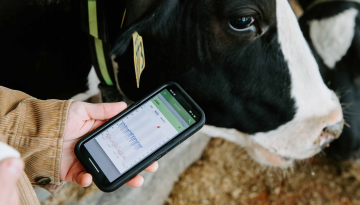
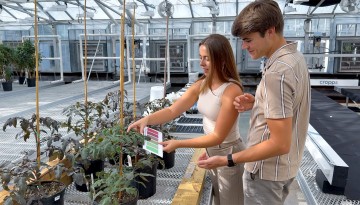
Cornell University has been awarded a portion of a $2 million planning initiative from the U.S. National Science Foundation to establish AI4Ag, a national testbed for artificial intelligence in agriculture.
By combining the design principles and materials of soft robotics with microscale combustions, researchers created a high-resolution electronic tactile display that can operate in messy, unpredictable environments.