A Cornell-led collaboration devised a potentially low-cost method for producing antibodies for therapeutic treatments: bioengineered bacteria with an overlooked enzyme that can help monoclonal antibodies boost their immune defenses.
Nearly a decade after they first demonstrated that soft materials could guide the formation of superconductors, Cornell researchers have achieved a one-step, 3D printing method that produces superconductors with record properties.
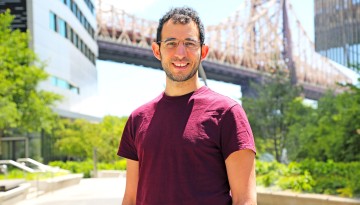
Mako, co-founded by assistant professor Mohamed Abdelfattah, sets out to tackle one of artificial intelligence’s most pressing infrastructure challenges: optimizing the computing efficiency of graphics processing units.
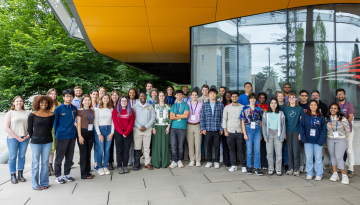
Over the summer, thirteen undergraduates from across the country came to Ithaca to participate in the Center for Research on Programmable Plant Systems’ Research Experience for Undergraduates to work on interdisciplinary projects in digital biology, from gene delivery to automation of plant tissue protocols.
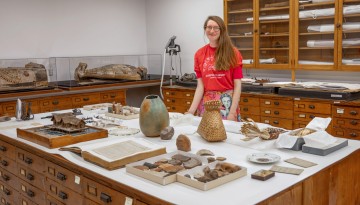
The celebration also features a welcome speech at 12:15 p.m. by Elaine L. Westbrooks, Carl A. Kroch University Librarian, and open houses for the new Anthropology Collaboratory and Library Map Collection.
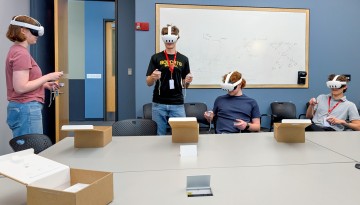
The Cornell NanoScale Science and Technology Facility has launched a free VR youth outreach module, designed to prepare the next generation of students in cutting-edge microchip fabrication.
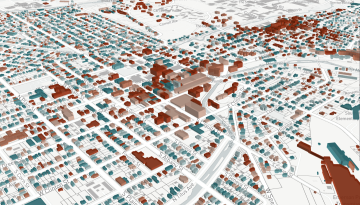
Using Ithaca as a case study, researchers have demonstrated a software tool that can quickly model building energy use and simulate the most cost-effective strategies for improving efficiency and reducing emissions.
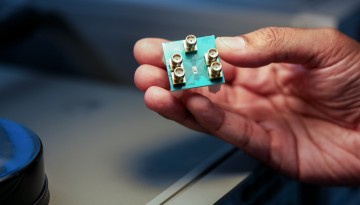
Cornell Engineering researchers have developed a low-power microchip they call a “microwave brain,” the first processor to compute on both ultrafast data signals and wireless communication signals by harnessing the physics of microwaves.