Cornell researchers have demonstrated that, by zapping a thin film with ultrafast pulses of low-frequency infrared light, they can cause its lattice to atomically expand and contract billions of times per second, potentially switching its electronic, magnetic or optical properties on and off.
FOSAI, a Cornell-led company specializing in plug-and-play architectures and data services for space vehicles and other mission-critical systems, has been acquired by Pasteur Labs, a developer of AI–driven simulation tools.
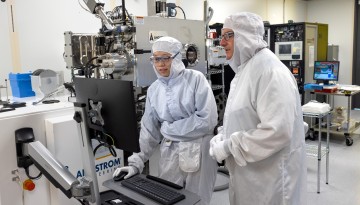
The Cornell NanoScale Science and Technology Facility has enabled scientists and engineers from academia and industry to conduct groundbreaking research, thanks to continuous support from the National Science Foundation. But that funding is now at risk.
Six Cornell inventors developing projects in robotics, advanced materials, agriculture, biotechnology, AI for medical education and veterinary medicine have been selected for the spring 2025 cycle of the Ignite Innovation Acceleration program.
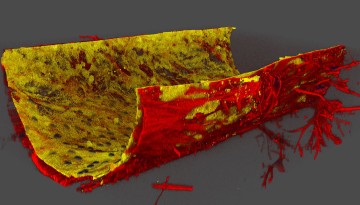
Cornell researchers have identified the signaling mechanism that triggers steroid-induced glaucoma by creating a 3D “eye-on-a-chip” platform that mimics the flow of ocular fluids.
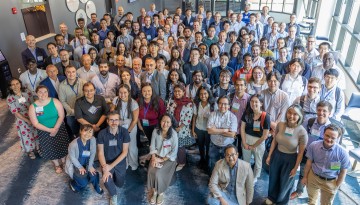
Cornell University hosted the 2025 SUPREME annual review, bringing together academia, industry, and government to advance next-generation semiconductor innovation and workforce development.