A new study from Cornell on AI writing assistants finds these tools have the potential to function poorly for billions of users in the Global South by generating generic language that makes them sound more like Americans.
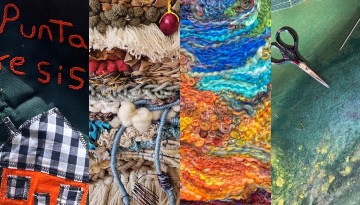
A collaboration between Cornell faculty, students and Ithaca community members is bringing together a monthlong event in downtown Ithaca, focused on Latine artists.
A conference May 5-7, “The Biopolitics of Global Health After Covid-19,” will combine biopolitical and anthropological inquiry to spark a cross-disciplinary dialogue about (post-) pandemic discourses and practices of global health.
As an avid reader of personal advice columns, historian Mary Beth Norton found the perfect confluence of interests in the Athenian Mercury, a London periodical published from 1691-97 that answered readers’ questions about love and marriage.
Princeton history professor Michael Gordin will give the inaugural lecture celebrating the life and work of Henry Guerlac ’32, M.S. ’33, an influential historian of science and Cornell faculty member for three decades.
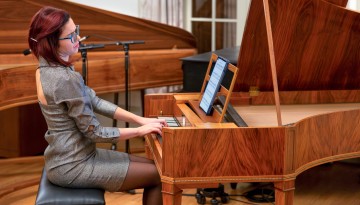
A $5 million gift from the Abraham J. & Phyllis Katz Foundation to the Cornell Center for Historical Keyboards will secure the future of its museum-quality holdings, as well as a rich program of concerts, festivals and educational offerings.
On April 25, seven Society for the Humanities’ Fellows will present their projects in progress during the annual Spring Fellows’ conference, highlighting the various ways that the theme of silence has been explored –
The culmination of a year-long study of “New/Futurism: Installation, Intermedia, Interactive & Immersive Dance,” the April 25-26 performance also features the work of influential choreographer Merce Cunningham and highlights collaboration among art forms.