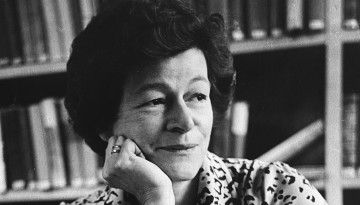
Mary Ann Nevins Radzinowicz, the Jacob Gould Schurman Professor of English Literature Emerita in the College of Arts and Sciences, died March 15 in Ballyvaughan, Ireland. She was 97.
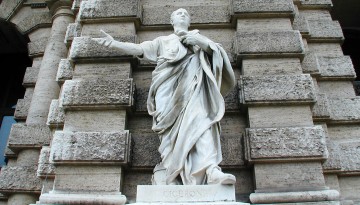
A theory of religion considered “modern” by many scholars was actually described 1,700 years ago, according to new research by Toni Alimi, a Klarman Postdoctoral Fellow in classics and philosophy in the College of Arts and Sciences.
A new book by linguist Michael Weiss provides the first pedagogical grammar ever compiled for an ancient Indo-European language used in parts of what is now western China.
Featuring a unique instrumentation of trumpet, trombone, bass clarinet, and baritone voice, loadbang headlines a week of great musical performances April 11-17.
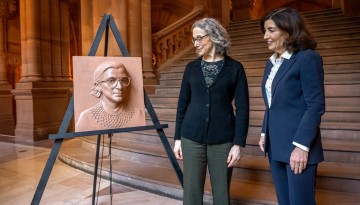
For the first time in 125 years, the face of a celebrated New Yorker – Ruth Bader Ginsburg – will be permanently commemorated at the New York State Capitol’s Great Western Staircase.
Unlike most female mammals whose vaginal entrance opens before or during puberty and remains that way for the rest of their lives, this rodent’s vaginal entrance remains sealed into adulthood and has the ability to open or close back up multiple times during a lifetime.
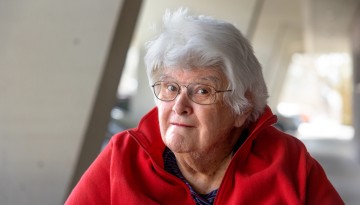
Rossiter's work changed history and shed light on the many ways women were involved in the advancement of science, as well as how they were pushed out of the field.
Natural language models such as ChatGPT and GPT-4 open new opportunities for malicious actors to influence representative democracy, new Cornell research suggests.