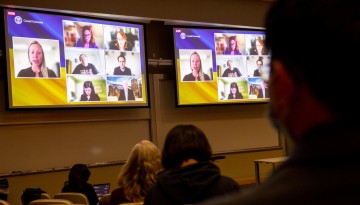
Faculty experts and Ukrainian students will speak about how the Russian invasion of Ukraine threatens lives, the post–Cold War international order and the stability of the global economy at an event March 17 at 4:30 p.m.
As ground-based and space telescopes improve, astronomers need a color-coded guide to compare Earth’s biological microbes to cold, distant exoplanets to grasp their composition.
Three students from Cornell Law School’s Asylum and Convention Against Torture Clinic have been able to give an asylum seeker from Cameroon a rare second chance to prove he should be eligible to stay in the United States.
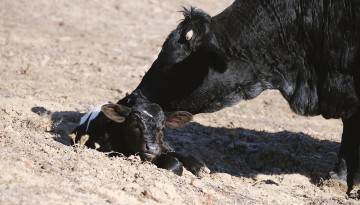
Globally, by the end of this century low-income cattle farmers in poor countries may face financial loss between $15 to $40 billion annually, due to looming climate change.
Clarity about the goals of sanctions against Russia will be key to attempts to de-escalate the conflict, Cornell faculty experts said during a March 4 panel discussion.
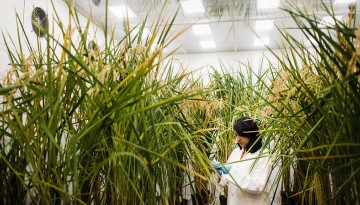
Four new studies explore lessons learned from the first five years of the Gender-responsive Researchers Equipped for Agricultural Transformation (GREAT) project.
A letter signed by 163 Nobel Prize laureates, and drafted by Cornell Nobel laureate Roald Hoffmann, condemned Russia’s attack on Ukraine and expressed support for the Ukrainian people.