The Tata-Cornell Institute for Agriculture and Nutrition has been awarded a $1 million grant from the Walmart Foundation to assess challenges facing small-farm aggregation models in India and Mexico.
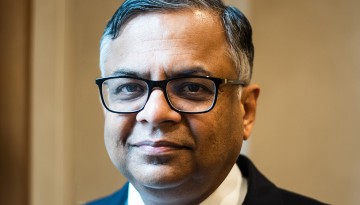
Natarajan “Chandra” Chandrasekaran will talk with President Martha E. Pollack on “Leadership in the 21st Century” in this year’s Hatfield Lecture, Oct. 16 in Mentors Lecture Hall, G01 Gates Hall.
Researchers from every corner of Cornell are mobilizing to tackle one of the grand challenges of the modern era – migration – with a new initiative that launched Oct. 1.
Cornell Law School launched its Cornell India Law Center on Sept. 26 with a lecture by Richard Verma, vice chairman and partner at the Asia Group and former U.S. ambassador to India.
Cornell will host a Precision Nutrition Symposium, Oct. 14-15, designed to foster the development of collaborative and multidisciplinary working groups from Cornell’s Ithaca and New York City campuses.
Twenty-four faculty members, representing six colleges and the Cornell University Library, make up the 2019-20 cohort of the Engaged Faculty Fellowship Program.
After an eight-month study, a task force of 16 faculty members has chosen “Migrations” as the theme of the first Cornell Global Grand Challenge, which will tackle the issue with resources from across the university.
A Cornell-led team has developed a computational model that uses artificial intelligence to find the most sustainable configurations of hydropower dam sites in the Amazon basin.
The U.N.’s Global Sustainable Development Goals report – prepared by independent scientists, including Cornell’s Parfait M. Eloundou-Enyegue – was delivered Sept. 10 to the U.N. Secretary-General.