Cornell COP26 delegation fueled the climate conversation in Glasgow, building new and unexpected connections to catalyze extraordinary change with support from Cornell Atkinson.
Around 1,450 Cornell students completed their studies this month. While the December Recognition Ceremony was canceled, some shared their university experiences.
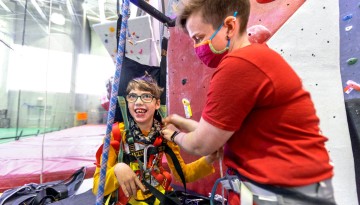
The Lindseth Climbing Center accommodates people with physical and neurological disabilities, with specialized equipment and programs that make rock climbing accessible to all.
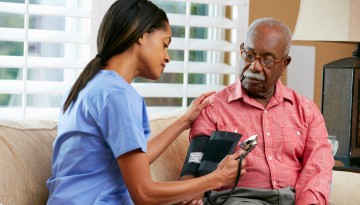
Home health care workers often suffer from poorer physical and mental health, when compared with similar low-wage frontline workers, according to new research by Weill Cornell Medicine.
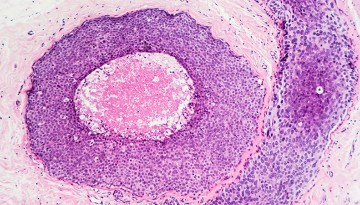
Researchers at Weill Cornell Medicine have identified significant differences in the molecular characteristics of tumors from younger and older cancer patients across several cancer types.
C’Dots, silica-encased nanoparticles developed in the lab of engineering professor Ulrich Wiesner, have just begun their first therapeutic human clinical trial. They’re being further developed by Elucida Oncology Inc., a company co-founded by Wiesner.
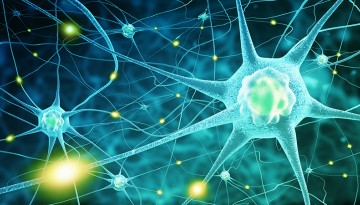
Pound for pound, the brain consumes vastly more energy than other organs. Now, researchers at Weill Cornell Medicine have found that the process of packaging neurotransmitters may be responsible for this energy drain.
Vanessa Bohns, a social psychologist and professor of organizational behavior at the ILR School, says there are ways – starting with intentional rest and recovery – to recalibrate after nearly two years of a pandemic-induced, always-on work mindset.