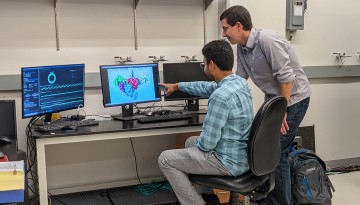
The new findings published in Science capture never-before-recorded stages of a molecular construction process, with implications for future pharmaceutical development.
A new study suggests that greater cumulative exposure to estrogen in life may counter the decline in brain-matter volume that occurs with menopause, in key brain regions affected in Alzheimer's disease.
Working with the Armenian delegation at COP26, Allison Chatrchyan aims to shape U.N. agriculture policy to reduce greenhouse gas emissions and increase carbon sequestration.
Katherine H. Saunders MD ’11, an assistant professor of clinical medicine at Weill Cornell Medicine, specializes in the care of patients with obesity and weight-related medical complications.
JP Pollak, co-founder and chief architect at The Commons Project Foundation, which is working on a universal vaccine app, is the guest for the fifth episode of the Startup Cornell podcast.
A team of graduate students in food science, mechanical engineering and biological engineering is among the winners of Phase 1 of the NASA Deep Space Food Challenge.
The grant will fund an effort to study how abnormal protein aggregates may spread from the gut to the brain to drive the early stages of Parkinson’s disease.
This semester, the Executive Accountability Committee announced implementation progress including the launch of a new central mental health and wellness resource website and a new peer support model adopted by the student-led Empathy Assistance and Referral Service.
Researchers and anyone interested in a range of health-related topics now have access to decades’ worth of public opinion with the launch of the Health Poll Database, a new resource created and curated by the Roper Center for Public Opinion Research at Cornell.