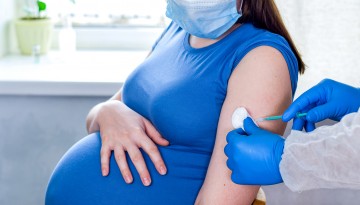
Women who receive COVID-19 mRNA vaccines produced by Pfizer-BioNTech or Moderna while in their third trimester of pregnancy generate a strong immune response and pass protective antibodies to their babies.
Many Americans remain confused about when COVID-19 vaccines provide strong protection and the need for continued public health precautions, according to new Cornell research.
In the study, researchers at Weill Cornell Medicine and their colleagues also identified new potential treatments for COVID-19 patients and described a model for drug screening.
To feed the world in a healthy, sustainable way, nations need to reorient today’s agri-food systems for distant generations, said Chris Barrett at an Earth Day forum.
The Discovery Kitchen, a state-of the-art teaching kitchen under construction in the North Campus Residential Expansion's dining facility, will bring together researchers and food service professionals to advance sustainable menus, dietary education and food literacy across campus.
Diversity leaders at Weill Cornell Medicine have launched ambitious community vaccination and education efforts, with the goal of improving uptake and helping those who are reluctant to get the vaccine.
The Michigan city’s adult residents suffered a range of adverse health symptoms potentially linked to the water crisis that began in 2014, with Black residents affected disproportionately, according to new research.
Online continuing education courses developed by faculty in the Division of Nutritional Sciences (DNS) – one about infant and young child feeding for a global audience, and another about policy, systems and environmental (PSE) approaches to improving nutrition in the U.S. – address critical topics including undernutrition, maternal and child health, and childhood obesity.
In a study published April 14 in PLOS One, an international research team including Michèle Belot, professor in the Department of Economics, found that children valued sweet food more after receiving it as a reward.