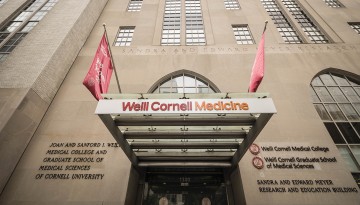
Dr. Augustine M.K. Choi, the Stephen and Suzanne Weiss Dean of Weill Cornell Medicine and provost for medical affairs of Cornell University, has been elected to the National Academy of Medicine.
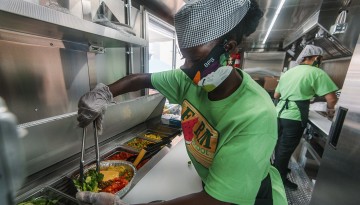
With help from Cornell Cooperative Extension, the Buffalo City School District unveiled a new Farm to School food truck, which will bring locally-sourced hot food to inner city families.
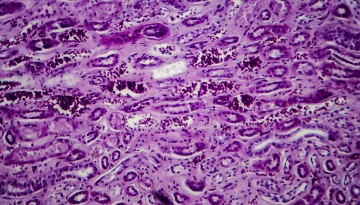
An intercampus research team has been awarded a five-year, $3.65 million grant from the National Institutes of Health to develop a quick, inexpensive method for accurately diagnosing urinary tract infections in kidney transplant patients.
A new interdisciplinary study from the College of Veterinary Medicine shows that the protein that lubricates our joints may actually be a signal of impending arthritis in animals and humans.
Passive data from smartphones – including movement, ambient sound and sleep patterns – can help predict episodes of schizophrenic relapse, according to new Cornell Tech research.
Small-scale farmers see a path to solving global hunger over the next decade, thanks to a Cornell-hosted project that used artificial intelligence to cull ideas from more than 500,000 scientific research articles.
For the third year in a row, Weill Cornell Medicine has been awarded the Health Professions Higher Education Excellence in Diversity Award by INSIGHT Into Diversity magazine.
Three New York state companies have been chosen to participate in the Cornell Center for Materials Research JumpStart Program, through which they will collaborate with faculty members to develop and improve their products.
Researchers led by Hening Lin have found a new way to potentially treat inflammatory bowel disease, as well as other autoimmune disorders, by targeting a mechanism that regulates the signaling pathway that enables inflammation to occur.