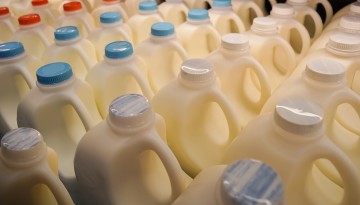
For families in western and central New York hurt by severe economic conditions brought on by the coronavirus pandemic, relief is on the way – in the form of cold milk, delivered to local food banks.
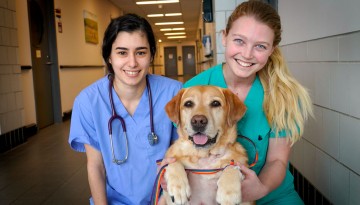
A team of doctors from the College of Veterinary Medicine and Weill Cornell Medicine performed rare canine open-heart surgery to save Lucy, a 7-year-old yellow Labrador retriever.
More communities can protect their residents from water shutoffs, through oversight or publicly owned water utilities, according to a new policy research paper co-authored by Mildred Warner, professor of city and regional planning.
Doctoral students Sri Lakshmi Sravani Devarakonda and Cheyenne Peltier have been named winners of the 2019-20 Cornelia Ye Outstanding Teaching Assistant Award.
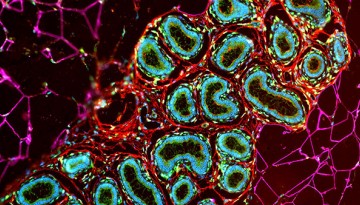
A class of immune cells push themselves into an inflammatory state by producing large quantities of a serotonin-making enzyme, a finding that could inform future treatments for asthma and other allergic disorders.
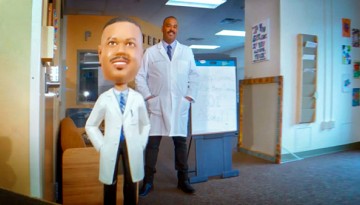
Dr. John Clarke, director of occupational medicine at Cornell Health, writes, produces and performs rap music on health-related topics, most recently coronavirus.
Cornell scientists have developed a new technique for imaging a zebrafish’s brain at all stages of its development, which could have implications for the study of human brain disorders, including autism.
A Cornell faculty member is part of a core team that has organized the Tompkins County COVID-19 Food Task Force, a nerve center working to ensure that those in need have access to food and that food producers stay in operation during the crisis.
Cornell mathematicians are using game theory to model how the competition between cancer cells can be leveraged, so cancer treatment – which takes a toll on the patient’s body – might be administered more sparingly, with maximized effect.