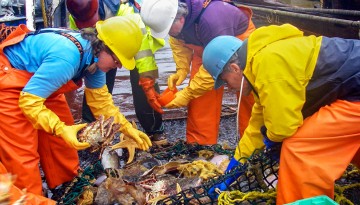
A new collaboration between the Cornell Atkinson Center for Sustainability and The Nature Conservancy this year will fund three studies that could be significant in the face of climate change.
Renerva, a medical startup developing an injectable gel to speed the healing of damaged nerves and creating a nerve-graft product, has joined Cornell’s McGovern Center.
As president of Taiwan, Tsai Ing-wen, LL.M. ’80, has presided over one of the most successful efforts in the world at containing COVID-19. In this Q&A, she discusses her approach to leadership and Taiwan’s success.
More than 200 attendees at Cornell’s Sustainability Leadership Summit heard how New York may be a leader in creating renewable energy and learned about the university’s own sustainability progress.
In a review of thousands of peer-reviewed studies, the What We Know Project an initiative of Cornell’s Center for the Study of Inequality, has found a strong link between anti-LGBT discrimination and harms to the health and well-being of LGBT people.
Cities in the “global south” – densely populated urban areas that are part of low-income countries in Asia, Africa and Latin America – should phase out pit latrines, septic tanks and other on-site methods of human waste management, according to a Cornell researcher.
Four Cornell researchers took a deeper look at mosquito reproduction with the goal of helping humans combat outbreaks of diseases such as dengue and Zika, which are worsening as the climate warms.
Sweet meets heat in “We Cayenne Change the World,” a rich, velvety chocolate ice cream, with a burst of cayenne pepper. Get an extra scoop, as it won Cornell’s annual Food Science 1101 final project.