A new Android app developed by Cornell Tech researchers and collaborators will make it easy for people to collect their personal health data and share it with trusted medical providers or apps.
The drawn-out process for diagnosing Lyme disease could become a thing of the past – good news for the thousands of people each year who get the tick-borne illness.
A new Cornell study presents a technique to identify viruses and bacteria in the human body and quantify injuries to organs by using dead fragments of DNA, called cell-free DNA, that roam throughout the bloodstream and urine.
Three collaborative New York City-based projects, designed to inspire cross-campus research partnerships, have been awarded grant funding totaling approximately $500,000 from the College of Agriculture and Life Sciences.
Children – especially teens – growing up in disadvantaged neighborhoods face greater odds of unhealthy weight gain as adults, according to new research by a Cornell sociologist.
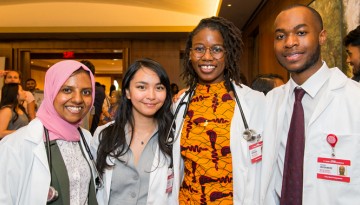
Weill Cornell Medicine’s 106-member Class of 2023 was sent off to medical school Aug. 20 with the annual White Coat Ceremony that officially marks the beginning of graduates’ medical education.
Researchers from Boyce Thompson Institute have discovered a natural compound that causes soil roundworms to mature faster and die earlier, which could inform studies of human development and aging.
The Office of Engagement Initiatives has awarded $1,307,580 in Engaged Curriculum Grants to 25 teams of faculty and community partners that are integrating community engagement into majors and minors across the university.
Cornell is teaming with Purdue University to establish the first Feed the Future Innovation Lab for Food Safety, which aims to solve some of the world’s greatest challenges in agriculture and food insecurity.