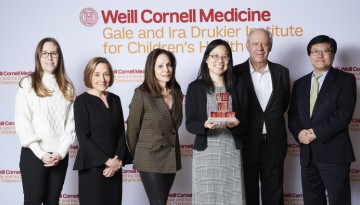
Clinical immunologist Dr. Helen Su, who studies the genetic causes of rare immune system diseases in children, has been awarded the Drukier Prize in Children’s Health Research by Weill Cornell Medicine.
A set of gene variants originating in Sub-Saharan West Africa may help explain why black women have worse breast cancer outcomes than white women, say researchers at Weill Cornell Medicine and NewYork-Presbyterian.
A new class of biomaterial developed by Cornell researchers for an infectious disease nanovaccine effectively boosted immunity in mice with metabolic disorders linked to gut bacteria – a population that shows resistance to traditional flu and polio vaccine.
Treatment guidelines recommended by medical specialist organizations are more likely to call for greater use of health care services and exacerbate overtreatment, says Dr. Sunita Sah, assistant professor of management and organizations.
The Weill Cornell Medical College Class of 2019 learned on national Match Day where they will be doing their internship and residency training – the next three to seven years of their medical careers.
Cornell’s first Digital Agriculture Hackathon saw students from a variety of disciplines come together to develop ways of addressing some of the world’s most pressing agricultural challenges.
At the Cornell Business Impact Symposium, keynote speaker Ashish Gadnis described a pathway to positive social impact that could help people around the world rise from poverty, reduce gender inequality, vanquish black markets and bring light to shadow economies.