Five student teams competed for the chance to win $25,000 March 18 as part of Hotel Ezra Cornell's seventh annual Hospitality Business Plan Competition. This year's winner was Team Natural Cuts.
Weill Cornell Medicine celebrated one of its best Match Days ever March 17, with 100 percent of the graduating medical students matching to residency positions - the next three to seven years of their medical careers.
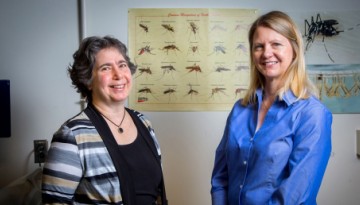
Cornell researchers are exploring a new approach to reducing the spread of mosquito-borne viruses through seminal fluid proteins from male mosquitoes that disrupt the reproductive biology in females.
One out of every four children admitted to intensive care units for critical illness develops delirium, according to an international study led by Weill Cornell Medicine investigators.
A newly discovered genetic mutation that is found in a subtype of prostate cancer is integral to the disease’s development and growth, according to research from Weill Cornell Medicine scientists.
Weill Cornell Medicine researchers will receive a grant from the Department of Defense to conduct a study of the molecular machinery driving the most aggressive prostate cancer.
Cornellians gathered March 4 for talks on food ethics by Andrew Chignell, visiting associate professor of philosophy, and on small farms by Anu Rangarajan, director of the Cornell Small Farms Program.
Anesthesia induces unconsciousness by changing the function of proteins on the surface of a thin membrane that forms a barrier around all cells, according to Weill Cornell Medicine scientists.