Researchers described their cutting-edge research at a biomedical engineering symposium, “Understanding and Treating Disease: Inspirations from Womb to Tomb,” on campus Sept. 16.
Horticulture professor Phillip Griffiths is working to fight black rot in the sukuma wiki, a staple crop in sub-Saharan Africa, by cross-breeding with similar plants that resist rot.
Monika Safford, M.D. ’86, has been named chief of the Division of General Internal Medicine at Weill Cornell Medical College and NewYork-Presbyterian/Weill Cornell Medical Center.
Minimally Invasive New Technologies Program (MINT) at Weill Cornell Medical College teamed with entrepreneurs to establish Lumendi, a start-up producing endoscopic tools for gastrointestinal surgery.
Sam Tilsen, assistant professor of linguistics, and colleagues used real-time magnetic resonance imaging to document anticipated vocal responses via the positions of vocal organs.
Researchers at the Caryl and Israel Englander Institute for Precision Medicine at Weill Cornell Medical College use genomic sequencing to understand factors that drive disease development and identify treatments most likely to be effective for each patient.
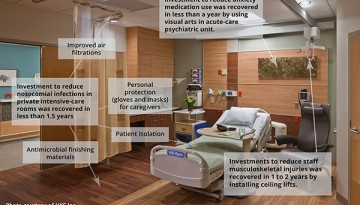
Well-designed healthcare facilities lead to better patient outcomes that, in turn, result in money saved for facility owners and patients, according to new Cornell research.
Chats in the Stacks book talks this semester at Olin and Mann libraries feature faculty authors discussing politics and economics as the 2016 presidential election approaches, and other topics from poetry to religion.