Taxes on elites earmarked for public safety have provided windows of opportunity in Latin America and a blueprint for state-building efforts across the developing world, Gustavo Flores-Macías argues in a new book.
The confusing response to COVID-19 in the U.S. resulted from decisions by President Donald Trump and his allies to politicize the pandemic by associating it with his own fate in office, according to a new book by a Cornell author.
New research finds a generation of federal school reform hasn’t addressed the primary drivers of racial gaps in achievement and attainment: economic inequality and segregated schools.
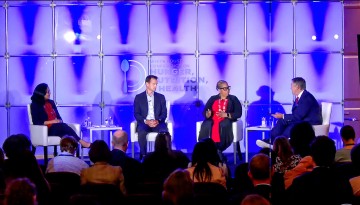
The conference sought to unite the public and private sectors around a coordinated strategy to drive change in the U.S. to end hunger, and improve nutrition and physical activity.
“Fixed-duration” strikes – such as the three-day walkout by 15,000 nurses in mid-September – protect worker interests and impose financial and reputation costs on employers, according to new ILR School research.
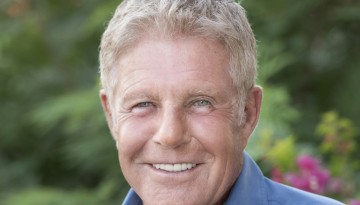
Reginald M. Ballantyne III, MBA ’67 is a prominent health care industry leader and longtime supporter of Cornell programs. He has endowed a scholarship that is the largest gift in the history of the Sloan Program in Health Administration in the Cornell Jeb E. Brooks School of Public Policy.
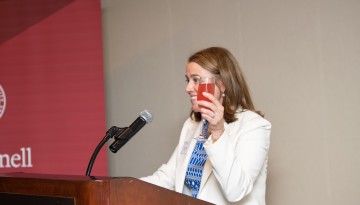
Inaugural Dean Colleen Barry offers a celebratory toast as the Cornell Jeb E. Brooks School of Public Policy marks its first anniversary with a party at the Statler Hotel, attended by more than 300 students, faculty, staff and friends of the school.