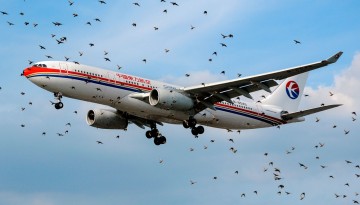
The risk of airplanes colliding with birds increases greatly during migrations, according to research from the Cornell Lab of Ornithology and partners, who have been looking for patterns in data from three New York City-area airports.
When Cornell’s COVID-19 Modeling Team began developing protocols for the return to campus, they turned to Cornell librarians to comprehensively answer a series of rapidly evolving – and critically important – questions.
The National Science Foundation has awarded a nearly $2 million collaborative research grant to principal investigators from Cornell and other institutions to assess the effectiveness, across several metrics, of open educational resources.
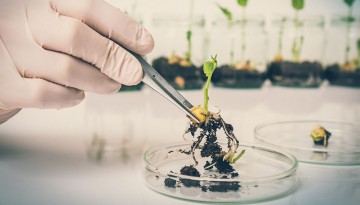
A new Cornell-led study describes a significant step toward improving photosynthesis and increasing yields by putting elements from cyanobacteria into crop plants.
The pathogen listeria soon may become easier to track down in food recalls, thanks to a new genomic and geological mapping tool created by Cornell food scientists.
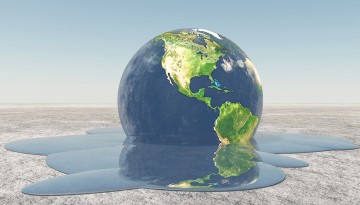
According to new research co-led by Jonathon Schuldt ’04, associate professor of communication, family values are a much stronger predictor of climate opinions and policy support than political views for U.S. Latinos.
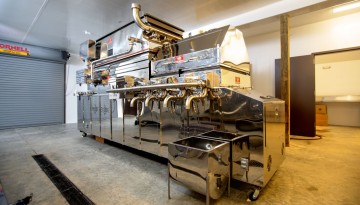
The Cornell Maple Program has opened an advanced, New York state-funded maple research laboratory, an upgrade that will enable research on making high-quality syrup, and new and existing maple products – all at commercial scales.