Scott Emr, director of the Weill Institute for Cell and Molecular Biology and professor of molecular biology and genetics, was awarded the prize for the landmark discovery of complexes that are central to life, health and disease.
The Cornell China Center has announced six new grant awards, totaling $140,000, to support research by Cornell faculty teams partnering with researchers in China.
Research led by Jonathon Schuldt ’04, associate professor of communication, found that a majority of the U.S. public is supportive of soil carbon storage as a climate change mitigation strategy, particularly when it’s viewed as “natural.”
The cardiology team at the Cornell University Hospital for Animals performed an unusual procedure to bring Buttercup, an 11-month-old Maltese-yorkie mix puppy with a rare congenital defect, back to good health.
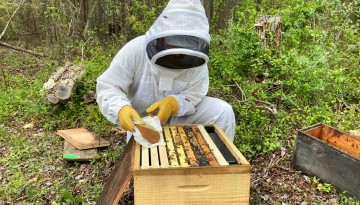
A Cornell-developed technology provides beekeepers, consumers and farmers with an antidote for deadly pesticides, which kill wild and managed bees that pollinate crops.
Cornell's Adult University invites alumni, their friends and family, and the general public to expand their minds this summer by taking live, online courses for adults and youth taught by Cornell faculty and graduate students.
Drs. Sohyoung Lee and Abrrey Monreal, postdoctoral researchers in the Department of Microbiology and Immunology, earned research awards for their work in typhoid toxin and peptide therapy research.
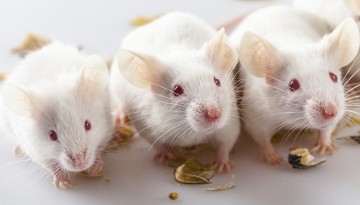
Cornell researchers have developed a technique for revealing how the motor cortex in the brain works – by focusing on a mouse’s tongue when it licks a water spout.