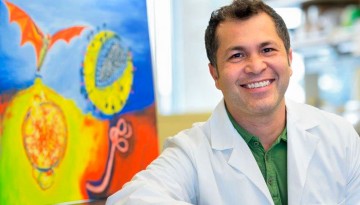
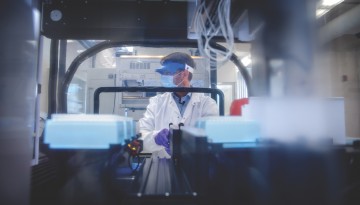
A Cornell researcher is studying Nipah virus in an effort to understand the basic mechanisms of transmission and infection, which are necessary steps toward vaccine development and other therapies.
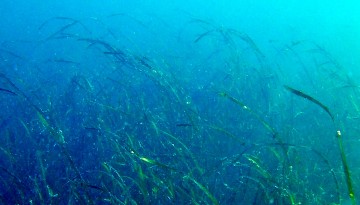
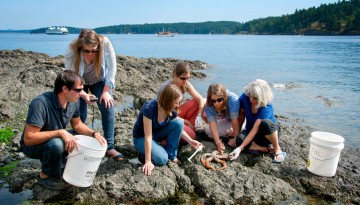
Olivia Graham joined five-dozen scientists on four continents to create a marine biology first: a global map to show where the ocean’s mid-sized predators are most active in a climate-changing world.
The “One Health” approach is perfectly suited to tackling the COVID-19 pandemic, the most serious public health crisis in recent history, Cornell researchers said during the university’s COVID-19 Summit, a virtual event held Nov. 4-5.
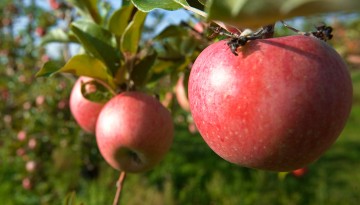
A Cornell-led, multi-institution, interdisciplinary team seeks to use computer vision, automation and robotics to optimize per-tree apple production, which is currently a highly manual and imprecise process.
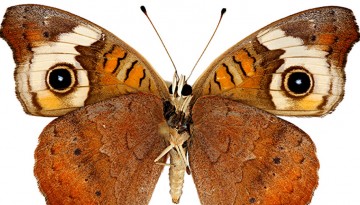
Cornell researchers have identified three genes responsible for changing the color of common buckeye butterfly wings, depending on what time of year the egg hatches and larvae develop.
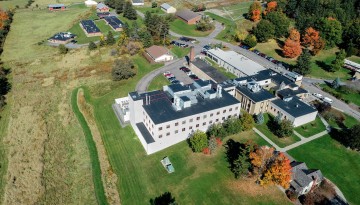
The Baker Institute for Animal Health has evolved and grown since its founding 70 years ago, and its breakthroughs regarding canine infectious diseases have established it as a global center for animal health research.
A paper on safety issues for scientists doing fieldwork describes how peers, mentors, departments and institutions can all help to address these problems.
The Cornell Atkinson Center for Sustainability is celebrating its 10th anniversary by focusing with renewed urgency on more powerful ways to translate knowledge into action.
Cornell researchers are working collaboratively at the forefront of their fields to re-examine and adapt their innovations to develop the tests, treatments and knowledge necessary to end the COVID-19 pandemic.