The “Leadership Skills for Success” workshop, March 24-25 in the Stocking Hall Conference Center, promises to help participants develop the critical communication and supervisory skills needed to build and lead their teams.
Cornell researchers have described a new type of gene drive with the potential to delay resistance that wild populations employ to fend off the genetic engineering of desired mutations.
Cornell faculty members are finding answers to questions related to a world on the move with a boost from Cornell’s first Migrations grants, awarded by the “Migrations” Global Grand Challenge.
Researchers from Cornell and Pennsylvania State University are developing a high-tech, portable imaging system that will increase profits and yields by making winter grapevine pruning more efficient.
New research from an interdisciplinary Cornell team has found that it takes as few as 10 minutes in a natural setting for college students to feel happier and lessen the effects of stress both physically and mentally.
A new study has uncovered key details for how the Salmonella bacteria that causes typhoid fever identifies a host’s immune cells and delivers toxins that disrupt the immune system and allow the pathogen to spread.
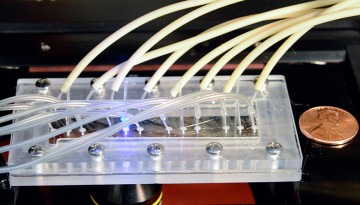
A Cornell-led team took an interdisciplinary approach to analyzing the behavior of breast tumor cells by employing a statistical modeling technique more commonly used in physics and economics.
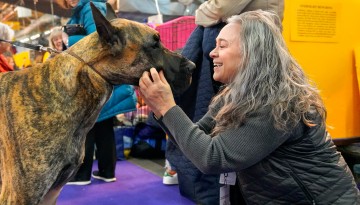
The world’s elite dogs vied for titles at the 144th Westminster Kennel Club Dog Show in New York City, and for the second year in a row, Cornell veterinarians were on call to care for the competitors.
Wojtek Pawlowski, associate professor of plant breeding and genetics, is partnering with French biotech company Meiogenix, with the goal of more effectively engineering maize, the world’s top staple crop.