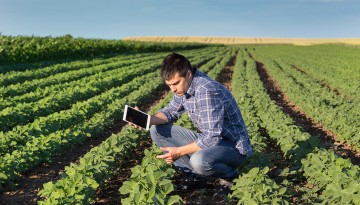
Projects ranging from a soil-swimming robot that can sense conditions in the root zone in real time to computational models that can predict produce spoilage received seed funds from the Cornell Initiative for Digital Agriculture’s new Research Innovation Fund.
Roger Way, Ph.D. ’53, professor emeritus of pomology and world-renowned apple breeder, died June 2 in State College, Pennsylvania. He was 100 years old.
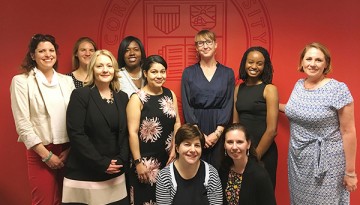
To address a funding imbalance, the Cornell Women’s Grant Fellows Workshop aims to familiarize female assistant professors with the landscape of federal funders, program officers and grant applications, and to teach tips for writing a winning proposal.
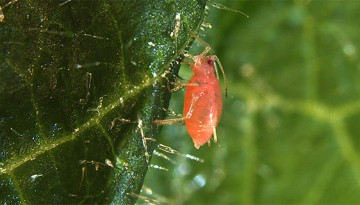
Researchers in Michelle Heck’s lab at the Boyce Thompson Institute are working to better understand how plant viruses interact with aphids on a molecular level, which could lead to better pest-control methods.
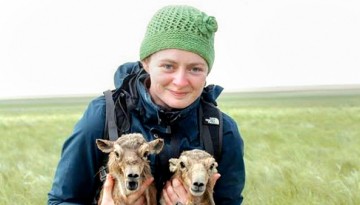
Dr. Wendy Beauvais, a postdoc in the College of Veterinary Medicine, has used a 2015 mass mortality event to create a framework to assess and prioritize future risks of pathogens jumping to wildlife.
Four new faculty projects have been selected to receive funding for collaborative, cross-disciplinary opportunities for learning and research in New York City.
Cornell plant breeders and geneticists, who’ve played a significant role in the improvement of the potato, are expanding their efforts as they make more wild potato seeds available to breeders around the world.
Eighteen Cornell doctoral students from 13 fields of study have received 2019-20 Engaged Graduate Student Grants to support community-engaged research relevant to their dissertations.
Eleven students from five countries made history May 25 as they became the first graduates of Cornell’s Master of Public Health (M.P.H.) program in a ceremony at the College of Veterinary Medicine.